

to gangrene
- verb
- /ˈɡæŋɡriːn/
- Specialized
- The wound gangrened due to poor circulation.
Examples
-
When a limb ceases to receive blood flow, it may begin to gangrene.
-
If the area gangrenes, amputation may be necessary.
-
Doctors warned that without prompt care, the tissue could gangrene rapidly.
-
If the wound is left untreated, it might gangrene and require amputation.
-
If the wound is not treated promptly, the tissue might gangrene, leading to serious complications.
-
The doctor warned him that if the infection spread further, his leg could gangrene and require surgery.
-
After neglecting his injury, he learned the hard way that it could gangrene without proper care.
Synonyms


 1
9.9
1
9.9
To die because it loses blood or gets a serious infection
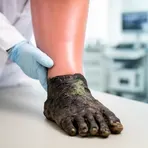
To become dead and rotten when it loses blood flow

To die and decay because of injury or disease
Antonyms

Compounds

- Specialized
When blood stops flowing to a body part, the tissue dies and becomes dry and dark brown

- Specialized
Dead skin and flesh that become dry and dark when blood flow stops, often in a toe or foot

A severe infection that kills body tissue and produces gas, usually caused by bacteria

- Specialized
A severe infection in body tissue caused by bacteria that makes gas and destroys it
How Severe

Surface Forms
Etymology
The verb gangrene comes from the same old French root gangrene, which meant 'to become a spreading sore', so to say tissue will gangrene is to say it will 'eat away' and die from infection or loss of blood.