

cold gangrene
- noun
- /koʊld ˈɡæŋɡriːn/
- Specialized
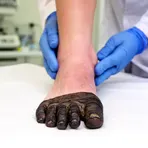
- The surgeon diagnosed the patient with cold gangrene after noting the dry, dark brown tissue on his foot.
Examples
-
Unlike wet gangrene, cold gangrene is not associated with significant infection or pus formation.
-
Cold gangrene typically occurs in individuals with severe arterial disease, especially in the lower limbs.
-
The doctor diagnosed him with cold gangrene.
-
She learned that cold gangrene can result from poor circulation.
-
Cold gangrene occurs when blood flow to a part of the body is severely restricted, leading to dead tissue.
-
The physician confirmed that the patient was suffering from cold gangrene due to narrowed arteries in his legs.
-
After examining the affected area, the nurse noted signs of cold gangrene, characterized by dry, dark brown skin.
Synonyms


 1
9.9
1
9.9
A type of gangrene where tissue becomes dry, shriveled, and dark from poor blood flow

Dead dry dark tissue on a body part that blood cannot reach

Dead skin and flesh that become dry and dark when blood flow stops, often in a toe or foot

To become dead tissue because of infection or loss of blood
How Severe

Surface Forms
Morphology
The phrase is a straightforward modifier + noun combination: 'cold' describes a type of 'gangrene', so a learner who knows both words can infer it is gangrene associated with cold conditions. Although clinical specifics (arterial obstruction, dry dark tissue) are specialized, the basic sense of a kind of gangrene linked to cold is directly derivable from the constituents.
Etymology
Cold gangrene is named for the way the injured area looks and feels: cold because the part loses warmth, and gangrene meaning 'dead tissue'. So the name refers to body tissue that becomes dry, dark and cold because 'no blood flow' reaches it.