

mumification necrosis
- noun
- /ˌmʌmɪfɪˈkeɪʃən nɪˈkroʊsɪs/
- NSFW
- Doctors explained that mumification necrosis can occur due to poor blood flow.
Examples
-
Patients with advanced diabetes are at higher risk for developing mumification necrosis in their extremities.
-
Treatment of mumification necrosis often requires surgical removal of the dead tissue.
-
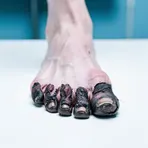
The surgeon diagnosed the blackened toes as mumification necrosis resulting from chronic arterial insufficiency.
-
The patient was diagnosed with mumification necrosis.
-
Patients with advanced diabetes are at higher risk for developing mumification necrosis in their extremities.
-
The surgeon diagnosed the blackened toes as mumification necrosis resulting from chronic arterial insufficiency.
-
Treatment of mumification necrosis often requires surgical removal of the dead tissue.
Synonyms
 16
8.7
16
8.7

Dead tissue caused by infection or loss of blood
 11
8.2
11
8.2
Death of body cells and tissue in one area caused by injury, infection, or loss of blood
 1
9.9
1
9.9
Death of body tissue in one place often caused by infection

 1
9.9
1
9.9
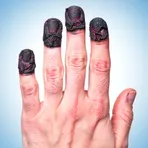
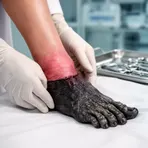
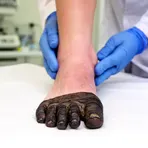
A type of gangrene where tissue becomes dry, shriveled, and dark from poor blood flow

Dead skin and flesh that become dry and dark when blood flow stops, often in a toe or foot
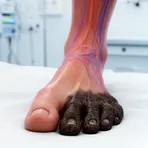
When blood stops flowing to a body part, the tissue dies and becomes dry and dark brown
Surface Forms
Morphology
mumification + necrosis
The term is a straightforward compound of 'mumification' (the process/state of becoming mummified or dried) and 'necrosis' (localized tissue death), so the meaning—tissue death with a dry, mummified appearance—is directly recoverable from the parts. This follows standard medical compounding patterns and is predictable for a learner who already knows both constituent senses, so it is transparently compositional.
Etymology
Mumification necrosis comes from the image of a 'mummy': mumification suggests body tissue that has dried and shriveled like an ancient mummy, and necrosis means tissue death. So the term describes body tissue that has died and become dry and dark brown because blood flow was blocked.