
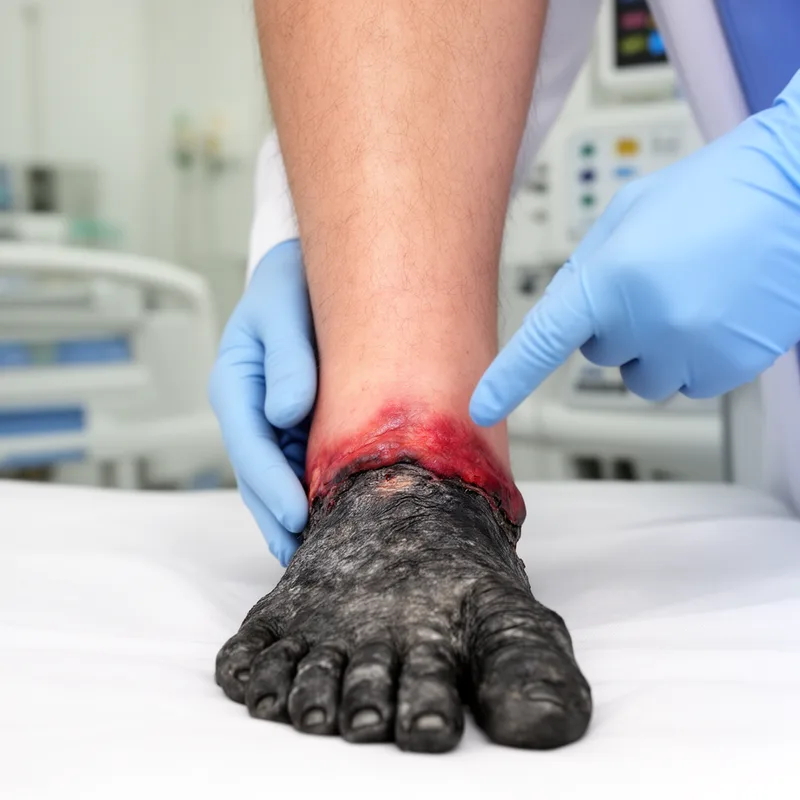
to mortify


 1
9.9
1
9.9
- verb
- /ˈmɔːrtɪfaɪ/
- Specialized
- Connor seizes the mortified Rocco and pulls him in, slamming the door shut behind him.
- mortified flesh
Examples
-
Mahiro was mortified by the passing of his sister.
Blog text (18) -
By this time tomorrow, his leg will be starting to mortify.
-
The zigzag pattern, the mortified flesh held in Alex's hand like the trophy it is.
Fiction book (2000) -
She liked the way the frayed plastic webbing of the cheap lawn chair mortified her flesh.
Fiction book (1999) -
He was repeatedly mortified by the subtle details of emaciation: the pointiness of the bones, the shriveled gums, the thin, loose hair.
Fiction book (1995) -
The doctor warned that without treatment, the injured toe could start to mortify quickly.
-
As the infection progressed, the tissue around the wound began to mortify and turn black.
-
The neglected wound was left untreated for too long, causing the surrounding area to mortify.
Synonyms
 3
9.8
3
9.8
Cause body tissue to die, often after injury or infection
To become dead and rotten when it loses blood flow
To die and decay because of injury or disease

To become dead tissue because of infection or loss of blood
How Decayed
- Specialized
1
9.9
 156
1.4
156
1.4
Surface Forms
Morphology
mortify = mort + ify
This sense ('to become dead/gangrenous') is close to the literal 'cause to die' interpretation of 'mort' + '-ify', but the root 'mort' is not a productive standalone English base, so learners may not reliably infer the meaning.
Etymology
Mortify in medicine keeps the root mort- 'death' and means tissue 'becomes dead' or gangrenous. This explains why doctors use the word when part of the body has died and may need removal.