

to necrose
- verb
- /nɛˈkroʊs/
- Specialized
- This incision prevents the already compromised skin flap from necrosing.
Examples
-
The fractured bone might be tenting or puckering the skin, indicating an urgent need for reduction so that the affected skin does not necrose.
Academic text (2006) -
If the tissue does not receive enough blood, it may necrose and lead to serious complications.
-
Long process of incus was necrosed with partial erosion of the handle of the malleus; stapes was intact.
Blog text (30) -
In severe infections, the affected area can begin to necrose, requiring immediate medical attention.
-
The doctor warned that if the wound is not treated properly, the cells could necrose.
Synonyms


 1
9.9
1
9.9
To die because it loses blood or gets a serious infection
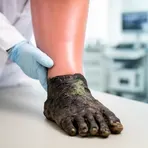
To become dead and rotten when it loses blood flow

To become dead tissue because of infection or loss of blood
How Damaged

Surface Forms
Etymology
Necrose comes from the Greek root necro-, from nekros meaning 'dead body'. That's why necrose is used to describe tissue or cells that 'die' or 'decay' after injury or disease.