

scentless hayweed
- noun
- UK
- The field was overrun with scentless hayweed after the spring rains.
Examples
-
Gardeners often remove scentless hayweed to prevent it from spreading among crops.
-
Many gardeners consider scentless hayweed a nuisance.
-
In eastern North America, scentless hayweed is sometimes mistakenly cultivated for its delicate appearance.
-
The scentless hayweed grows abundantly in the fields.
-
Gardeners often remove scentless hayweed to prevent it from spreading among crops.
-
In eastern North America, scentless hayweed is sometimes mistakenly cultivated for its delicate appearance.
-
The field was overrun with scentless hayweed after the spring rains.
Synonyms

An annual plant with divided leaves and white flowers often seen as a weed in Europe and North America
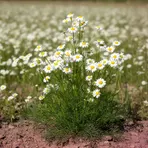
A common weed with white flowers and thin, divided leaves that looks like chamomile

A common annual weed with white daisy-like flowers and no smell
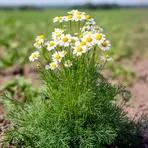
A common wild plant with small white daisy-like flowers, thin divided leaves, and little smell that grows in fields

A small plant with white daisy-like flowers that has little or no smell
How Scented


Surface Forms
Morphology
scentless + hayweed
This noun phrase is compositionally transparent: 'scentless' means 'without smell' and 'hayweed' can be decomposed into 'hay' + 'weed' (a weed associated with hay or hayfields), so the overall meaning 'a weed related to hay that lacks scent' is directly derivable. Botanical naming via descriptive compounds is common cross-linguistically and does not involve idiomatic or metaphorical shift, so a B1 learner who knows the constituent words would understand the MWE.
Etymology
Scentless hayweed comes from the simple picture of the plant: farmers found a common weed with small white flowers in their hay and saw it had 'no smell', so they called it scentless hayweed. So today scentless hayweed means 'a common weed with little or no scent'.