

Tripleurospermum inodorum
- noun
- Specialized
- Although similar to chamomile, Tripleurospermum inodorum lacks the characteristic scent.
Examples
-
Farmers frequently remove Tripleurospermum inodorum to prevent it from spreading in their crops.
-
Tripleurospermum inodorum often appears in fields and roadsides across Europe during the summer months.
-
The Tripleurospermum inodorum blooms in early summer.
-
Have you seen the Tripleurospermum inodorum in the garden?
-
Tripleurospermum inodorum often appears in fields and roadsides across Europe during the summer months.
-
Farmers frequently remove Tripleurospermum inodorum to prevent it from spreading in their crops.
-
The Tripleurospermum inodorum blooms with white flowers, attracting various insects.
Synonyms
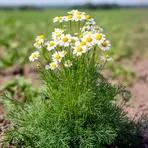
A common wild plant with small white daisy-like flowers, thin divided leaves, and little smell that grows in fields

An annual plant with divided leaves and white flowers often seen as a weed in Europe and North America

A small plant with white daisy-like flowers that has little or no smell
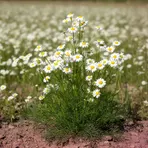
A common weed with white flowers and thin, divided leaves that looks like chamomile

A common wild plant with small white flowers that grows like a weed
Surface Forms
Morphology
Tripleurospermum + inodorum
This is a Latin binomial (taxonomic) name rather than a compositional English phrase; its parts are not ordinary English vocabulary and the second element is undefined in the provided dictionary entry. The specific sense ('scentless mayweed') is a specialized label that cannot be predicted from the constituents by an average B1 learner, so the name functions as an arbitrary label rather than a transparent compound.
Etymology
Tripleurospermum inodorum is a name that points to how the plant looks and smells. The last part, inodorum, means 'without smell', so this small white, daisy-like weed looks like chamomile but is 'scentless', which makes the name an easy memory hook.

