

to precipitate
 1
5.5
1
5.5

- verb
- /prɪˈsɪpɪteɪt/
- The convective currents transport water upward to much lower pressure and temperature, where it condenses and precipitates from the atmosphere.
Examples
-
That's where most of it went when the water precipitated out of the atmosphere.
Blog text (6) -
For clouds that are sufficiently long-lived or condensate-laden, larger hydrometeors such as rain or snow form and rapidly precipitate from the atmosphere.
Academic text (2012) -
The rain began to precipitate, soaking everything outside in just a few minutes.
-
As the temperature dropped, snow started to precipitate from the clouds, blanketing the ground.
-
With dark clouds forming overhead, we knew it would precipitate before long.
Synonyms
 ∞
1.0
∞
1.0
Move or drop down from a higher to a lower place
 541
1.0
541
1.0
To fall from clouds as small drops of water
 129
1.3
129
1.3
To fall from the sky, as rain, snow, or ash
 116
1.0
116
1.0
To fall from the sky as frozen white flakes
 36
3.4
36
3.4
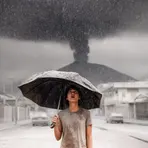
Fall from above in large amounts, like ash or confetti
 15
1.9
15
1.9
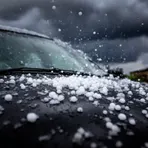
To fall from the sky as small balls of ice during a storm
 1
3.3
1
3.3
To fall as a mix of rain and snow
 1
3.5
1
3.5
To fall from above in large amounts, like rain or ash
Antonyms

How Heavy

Surface Forms
Morphology
precipitate = precipit + ate
Although the verb ends in the productive suffix '-ate', the stem 'precipit-' is not a standalone English word and the meaning is not transparently built from familiar English morphemes for most learners.
Etymology
Precipitate comes from Latin parts prae- 'before' and caput 'head', which gave the image of falling 'headfirst'. So, when rain or snow 'precipitate' from clouds, they are simply 'falling' down from above.