
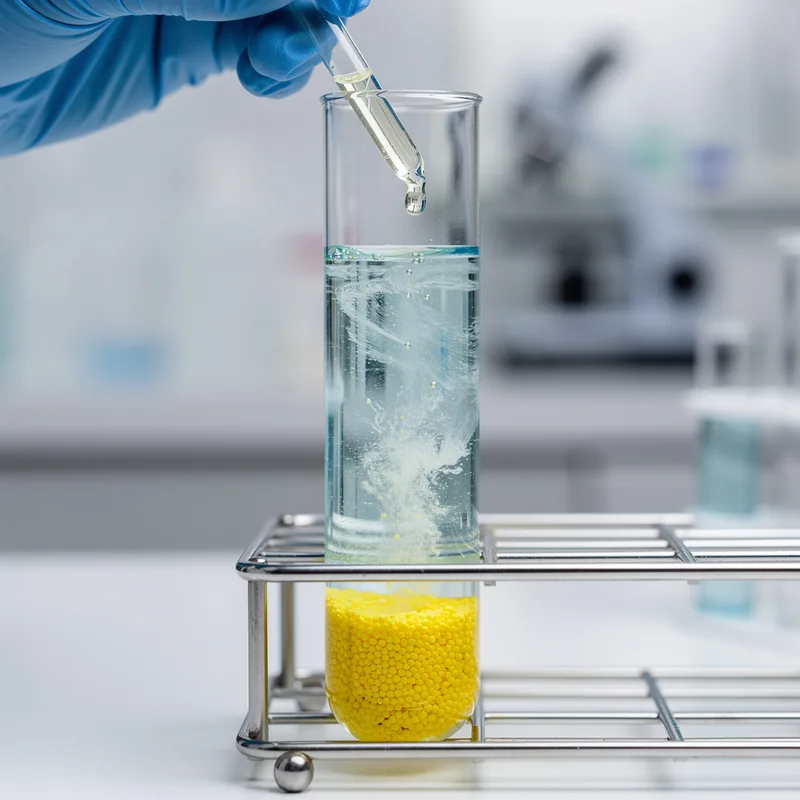
precipitate
 1
8.1
1
8.1

- noun
- /prɪˈsɪpɪteɪt/
- Specialized
- A reaction using nitric acid and potassium iodide reagent produces a canary yellow precipitate, a positive indicator for lead.
- formation of a precipitate
Examples
-
The acid caused the black precipitate to form in a solution of gold in Aqua regia, right?
-
Whenever dissolved iron and dissolved oxygen get together, they combine to form a nearly insoluble precipitate, which drops out of solution.
-
If a precipitate forms, start over because the results will be inferior.
Academic text (1996) -
And you'll see the immediate appearance of a dark black precipitate of lead sulphide.
-
Despite the difficulty in keeping the drinking water free of precipitates, this is a very worthwhile demonstration.
Academic text (1996) -
A reaction using nitric acid and potassium iodide reagent produces a canary yellow precipitate, a positive indicator for lead.
Academic text (2003) -
The yellow color is caused by an iron precipitate that coats the stream bottom.
Synonyms
A solid that forms and comes out of a liquid during a chemical reaction
Surface Forms
Etymology
Precipitate is the solid that has 'fallen out' of a liquid, and the name comes from Latin prae- 'before' and caput 'head', which suggest a 'headfirst' fall. So a chemical precipitate is literally the material that has 'fallen' to the bottom.