

to precipitate
 3
8.0
3
8.0

- verb
- /prɪˈsɪpɪteɪt/
- Specialized
- And when the iron was all precipitated, our little friend began spilling its oxygen into the atmosphere.
- carbonate precipitates
- calcium carbonate precipitates
- precipitate proteins
Examples
-
Some weeks later, blue crystals were noted precipitating out of a routine water sample.
Academic text (2003) -
Can you see the blackness has now been precipitated and we have a murky white colour there and here this is now gone chocolate brown.
-
And that has stuck around and that's all precipitated to the same degree in each sample here.
-
We extracted DNA from the cells and we precipitated in an acid.
-
Today, very little is left; iron was precipitated out of seawater on prodigious scales.
Blog text (28) -
DNA was extracted with a phenol-chloroform solution and precipitated with a sodium acetate solution.
Academic text (2014) -
Barbara Helwig of Berlin's German Archaeological Institute suspects a radical shift in trade patterns precipitated the decline.
Academic text (2011) -
Staff made the assumption that the injection of chlorine into the disinfection process precipitated small amounts of oil and grease.
Academic text (2000) -
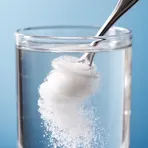
When the chemical reaction occurred, a solid began to precipitate out of the solution.
-
As the temperature decreased, more sugar began to precipitate from the syrup.
Antonyms
How Much

Surface Forms
Morphology
precipitate = precipit + ate
The chemical sense uses the same Latin-derived stem plus '-ate'; the stem is not a known English base and the technical meaning (separation as a solid) is not directly inferable from English morphemes alone.
Etymology
Precipitate comes from Latin parts prae- 'before' and caput 'head', giving the idea of falling 'headfirst'. In chemistry, a substance 'precipitates' when tiny particles 'fall out' of a liquid and become solid.