

to precipitate
 1
8.1
1
8.1

- verb
- /prɪˈsɪpɪˌteɪt/
- Formal
- As guides, we are there to assist in the evaluation of life's circumstances, life's goals, and the impending disruption and change that a new member of a family precipitates.
Examples
-
Just as having a certain mental state requires an appropriate disposition, so are dispositions precipitated by fitting mental states.
Academic text (1999) -
The sudden news of the merger precipitated a wave of uncertainty among the employees.
-
Instead, he had been precipitated into an alternate universe.
Fiction book (1998) -
The notion that On Kawara lurks behind the "self-objectified presence" precipitated by his "bureaucratic" records seems a strange suspicion.
Academic text (1999) -
"Not for sale," said Mama Hallie, leaning against the door with her full weight, like a boulder precipitating an avalanche, until he thought all the bones in his foot were going to break and tried to withdraw.
Fiction book (1996) -
Her fear of the dark can sometimes precipitate anxiety attacks when she is alone.
-
Heavy rains can precipitate flooding in low-lying areas of the city.
Synonyms
 168
5.3
168
5.3
Cause a process, event, or feeling to start
 154
3.4
154
3.4
To cause something to start, often an idea or strong feeling
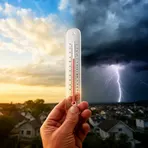
Something that causes a sudden, unexpected event or change
Antonyms

How Sudden

Surface Forms
Morphology
precipitate = precipit + ate
Although semantically related to 'falling' or 'causing to fall', the morphological parts are Latin-derived and not productive modern English morphemes that would let a learner derive this meaning reliably.
Etymology
Precipitate comes from Latin parts prae- 'before' and caput 'head', which together give the sense of being thrown 'headfirst'. So to precipitate someone or something into a state is to push them there suddenly and quickly.