
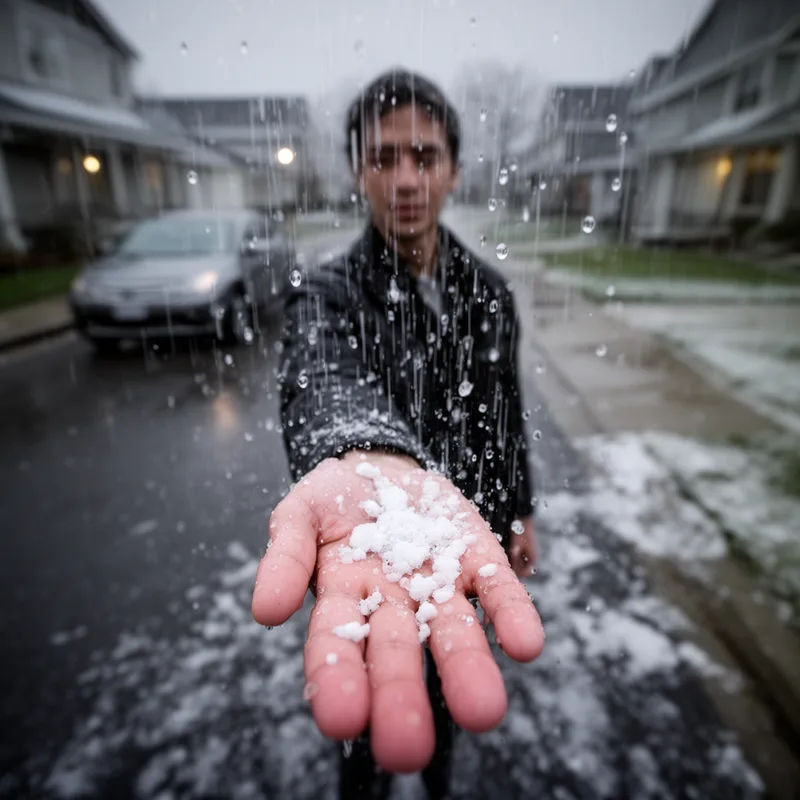
to sleet
 1
3.3
1
3.3

- verb
- /slit/
- UK
- The temperatures kept dropping, and it began to sleet.
- rain sleeting
- snow sleeted
Examples
-
I came in dead last; it rained, snowed, and sleeted all in the same day!
Blog text (20) -
"It was sleeting on Saturday."
Fiction book (1992) -
Thorn looked up for a moment before entering the building, ignoring the rain sleeting into his face.
Fiction book (1996) -
It sleeted in all directions; some of it hit Day, but he was only dimly aware of it touching him.
Fiction book (1999) -
It was snowing and sleeting at the time, and the temperature was in the upper thirties during late May.
Academic text (2009) -
Ivan had watched the day go from pearly to raw; a sleeting wind whipped at the grass.
Fiction book (1991) -
It was sleeting; it was Sunday; the shadowy air dulled the ginger tones in Anna's portraits.
Fiction book (1995) -
It sleeted every day that October and icy water blew onto the furniture and carpeting, but no one dared close the windows or say anything about it to me.
Fiction book (1996) -
It was sleeting then, I remember: I stood in front of the window; the sky and the earth were indistinguishable from one another; people were passing by, their necks bent; water flowed over the surface of the glass.
Fiction book (1993) -
As I walked to the store, it started to sleet, making the ground slippery.
Synonyms
 541
1.0
541
1.0
To fall from clouds as small drops of water
 129
1.3
129
1.3
To fall from the sky, as rain, snow, or ash
 1
5.5
1
5.5
To fall from clouds as rain or snow
Antonyms

Surface Forms
Etymology
Sleet as a verb comes from the same old English idea of icy rain. It simply means 'to fall as a mixture of rain and snow', so when it sleets the weather is sending down those small bits of ice that make things slippery.