
polyploid
- adjective
- /ˈpɒlɪˌplɔɪd/
- Specialized
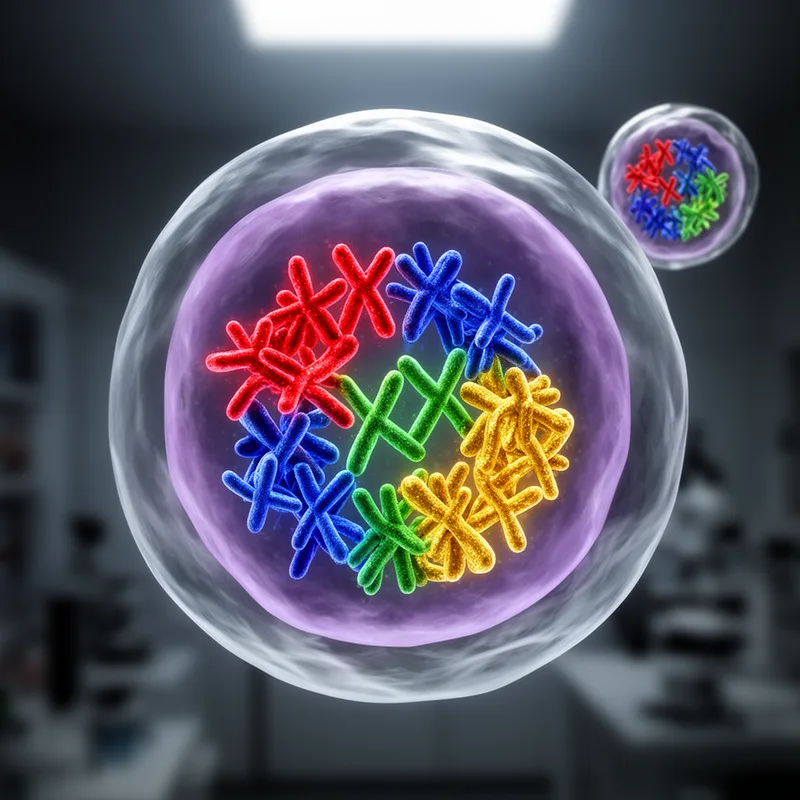
- Many flowering plants, including wheat and strawberries, are considered polyploid because they have multiple sets of chromosomes.
- polyploid species
- polyploid formation
Examples
-
In the laboratory, polyploid brine shrimp have higher numbers of offspring and longer reproductive periods than diploid individuals.
Academic text (1994) -
But results of work by Douglas and Pamela Soltis, and by other botanists, provide a different, more dynamic view of polyploid evolution.
Academic text (1998) -
Individuals are usually called polyploid if their somatic cells have more than two complete sets.
Academic text (2002) -
And what are the mechanisms, pathways, and rates of polyploid formation?
Academic text (1998) -
At the time that Ownbey discovered these two polyploid species, he recorded fewer than 100 individuals.
Academic text (1998) -
T. dubius is the shared parent for both of the polyploid species.
Academic text (1998) -
When the same numbers are applied to the pteridophytes, over 95% may be called polyploid.
Academic text (2002) -
In each individual of these new polyploid lineages, there are two complete genomes.
Academic text (2002) -
Using this baseline, about 50% of flowering plants can be considered polyploid.
Academic text (2002) -
Some other areas of the world harbor fungal strains that are tetraploid or polyploid, meaning that they have four or more copies of each chromosome.
Academic text (1994)
Antonyms
How Many Sets
- Specialized

- Specialized
- Specialized
- Specialized
- Specialized
Surface Forms
Morphology
polyploid = poly + ploid
The prefix poly- clearly means 'many', but ploid is a technical combining form referring to chromosome sets and is not a familiar standalone English base for most learners.
Etymology
Polyploid comes from poly- 'many' (as in polygon or polyglot) and -ploid 'set' or 'fold'. So when a cell or organism is described as polyploid, it has 'many sets' of chromosomes rather than the normal two.

