
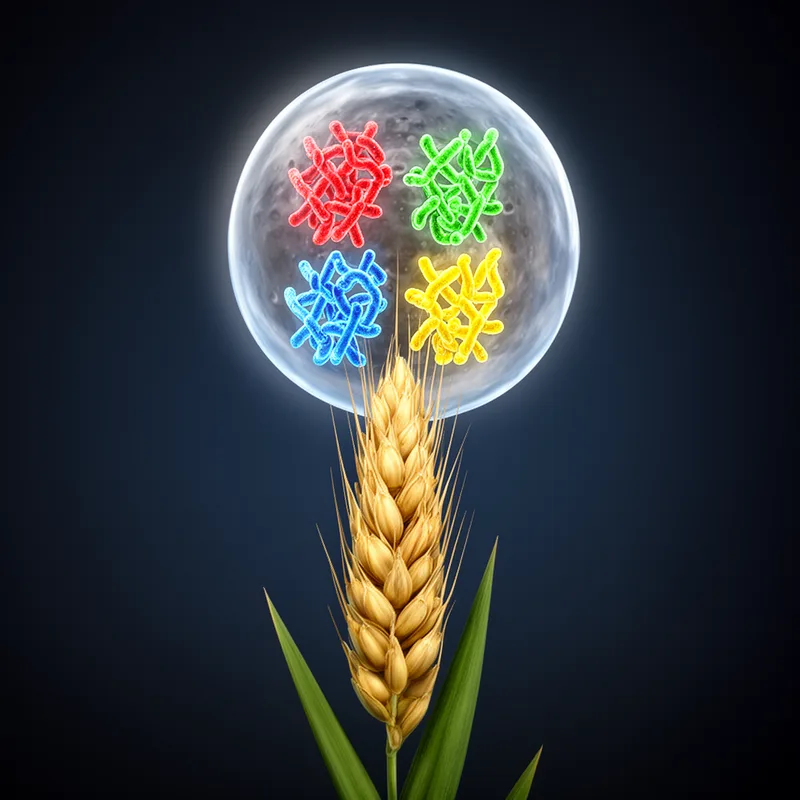
polyploid
- noun
- /ˈpɒlɪplɔɪd/
- Specialized
- There are two types of polyploids: autopolyploids, which contain multiple sets of the chromosomes of one species, and allopolyploids, which combine the chromosomes of two or more species.
- polyploid relative to diploid
Examples
-
Polyploids (species that have more than two sets of chromosomes) have been misunderstood, neglected, and even maligned, said botanist Douglas Soltis of Washington State University.
Academic text (1998) -
Thus, even relative to other Ceratopteris species, C. thalictroides is a polyploid.
Academic text (2002) -
Such a difference in breeding systems may explain in part the geographic success of polyploids relative to diploids.
Academic text (2002) -
The numerous chromosomes in polyploids present problems during meiosis when egg cells are produced.
Academic text (1994) -
Polyploids can also tolerate wider salinity and temperature ranges.
Academic text (1994) -
Many species of plants, such as wheat, are polyploids, meaning they have multiple sets of chromosomes.
-
Researchers found that polyploids often show greater resistance to environmental stress than their diploid relatives.
-
Some polyploids can thrive in harsh conditions because their increased chromosome number helps them adapt.
How Many Sets
- Specialized

- Specialized
- Specialized
- Specialized
- Specialized
Surface Forms
Morphology
polyploid = poly + ploid
The prefix poly- clearly means 'many', but ploid is a technical combining form referring to chromosome sets and is not a familiar standalone English base for most learners.
Etymology
Polyploid comes from poly- 'many' (as in polygon or polyglot) and -ploid 'set' or 'fold'. A polyploid is therefore an organism or cell with 'many sets' of chromosomes, meaning more than the usual two.

