
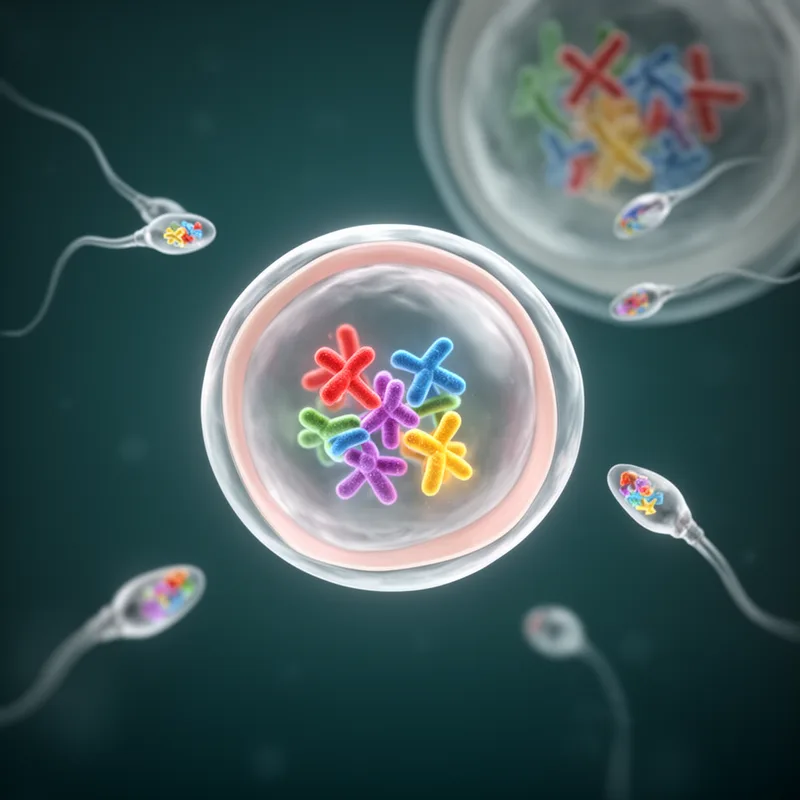
haploid
- noun
- /ˈhæp.lɔɪd/
- Specialized
- In humans, sperm and egg are both haploid, ensuring a balanced genetic contribution.
Examples
-
Now, we were also even able to show that we could make the male cells go through what's called meiosis, and we can get a haploid cell that looks an awful lot like a sperm.
-
The haploid cells produced during meiosis contain only one set of chromosomes.
-
In plants, the haploid phase does grow on its own.
-
OK, so these two gametes are no longer haploid for the orange chromosome.
-
The egg has its own haploid nucleus here and you can take a little needle and you suck that that nucleus right out of the egg.
-
First, let's take the asexual haploids, or haploids of any kind.
-
Production of haploids in BG through anther culture would allow breeders an efficient release of pure parental lines and better screening for resistance to diseases.
Academic text (2015) -
Haploids can be regenerated from anther or microspore explants, and the genome can be doubled using genome doubling agents like colchicine.
Academic text (2015) -
Research shows that haploids can be utilized to develop disease-resistant plant varieties.
Synonyms

A cell that has one set of chromosomes, like a sperm or egg

A cell or organism with a single set of chromosomes instead of the usual two
Antonyms
How Many

Surface Forms
Morphology
haploid = haplo + id
The combining form 'haplo-' is not a standalone English word and is mainly used in scientific/technical vocabulary, so typical learners cannot derive the meaning from everyday words.
Etymology
Haploid comes from the Greek root hapl- meaning 'single' and the ending -oid meaning 'like' or 'form', so a haploid is a cell that contains a 'single' complete set of chromosomes, such as a sperm or an egg.

