

phagocyte


 1
8.1
1
8.1
- noun
- /ˈfæɡəˌsaɪt/
- Specialized
 :
fagocito
:
fagocito
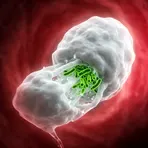
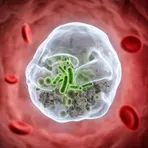
- When a foreign particle enters the body, a phagocyte will identify and consume it.
- mononuclear phagocyte
- phagocyte system
They act as phagocytes, which means they basically engulf bacteria or they engulf your cells that are infected with viruses.
- They act as phagocytes, which means they basically engulf bacteria or they engulf your cells that are infected with viruses.
Examples
-
First, phagocytes trigger the immune response by sending macrophages and dendritic cells into the blood.
-
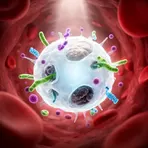
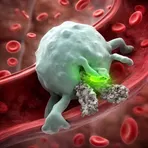
Phagocyte is a type of white blood cell.
Academic text (2015) -
They act as phagocytes, which means they basically engulf bacteria or they engulf your cells that are infected with viruses.
-
Phagocytes utilize the cytotoxic effects of reactive oxygen species, such as superoxide, hydrogen peroxide, and the highly toxic hydroxyl radical.
Academic text (2017) -
The phagocyte quickly engulfed the bacteria to protect the body from infection.
-
Phagocytes play a crucial role in the immune system by digesting harmful particles and debris.
Synonyms
 9
3.3
9
3.3
A blood cell that eats and kills germs to protect the body
 7
6.7
7
6.7
A large white blood cell that eats and removes germs and dead cells
 3
5.4
3
5.4
A white blood cell that helps the body fight infection by eating bacteria and fungi
 2
6.5
2
6.5
A large white blood cell with one nucleus that eats bacteria and other germs
 1
7.7
1
7.7
A white blood cell that eats and destroys bacteria and other germs
 1
5.8
1
5.8
A tiny part of the body that eats dead tissue and germs to help fight infection
 1
8.6
1
8.6
A white blood cell that eats and digests small germs or particles

A cell in body tissue that eats bacteria and dead cells to help the immune system
Compounds

- Specialized
A white blood cell that moves in the blood and eats germs or dead cells

- Specialized
A group of cells in the body that eat germs and dead cells to protect it
Surface Forms
Morphology
phagocyte = cell (opaque) = phago + cyte
Built from Greek combining forms 'phago-' (eat) + element meaning 'cell'; these technical combining forms are not recognizable as English base words to an average B1 learner.
Etymology
Phagocyte comes from the Greek parts phago- meaning 'to eat' and -cyte meaning 'cell', so it is a 'cell that eats' germs and dead cells in the body. That's why phagocytes protect us by swallowing and breaking down bacteria and worn-out cells.