

pestilence
 11
9.8
11
9.8

- noun
- /ˈpɛstɪləns/
- Literature
- During the 14th century, the plague was a devastating pestilence that claimed millions of lives across Europe.
- famine and pestilence
Loading YouTube…
Watch on YouTubeThe plague hits the Empire's great cities hardest, but the pestilence also reaches deep into the countryside.
- The plague hits the Empire's great cities hardest, but the pestilence also reaches deep into the countryside.
- US quake, pestilence, the black deaths or the most dreadful things that happened,
Examples
-
I should think she can do precious little till this terrible pestilence is lifted.
-
Famine, Pestilence, War, and Death—the Four Horsemen of the Apocalypse—come to claim his soul.
Fiction book (1993) -
Whatever the pestilence might be, it would have to be contained.
Fiction book (1999) -
What did they learn about the experiences of countries and regions while the pestilence raged?
-
Famine that will start wars and bring pestilence down upon us.
Fiction book (2001) -
And you have seen your loved ones dying from a pestilence that rips into your cities, into your villages.
-
The plague hits the Empire's great cities hardest, but the pestilence also reaches deep into the countryside.
-
No funerals now, no gatherings of any kind allowed in the hope that isolation will halt the pestilence.
Fiction book (1999) -
The devastation of war on infrastructure, famine, and bodies decaying in the open leads to pestilence... and even more death.
Blog text (8) -
Extremist millenarians would like to give history a push, helping create world-ending havoc replete with universal war, famine, pestilence, and other scourges.
Academic text (1996)
Synonyms
 266
6.6
266
6.6
A very serious disease that spreads quickly and kills many people
 7
7.8
7
7.8
A disease that kills many people quickly, for example the plague
 4
6.4
4
6.4
A severe disease in the Middle Ages that spread across Europe and killed millions
 2
9.9
2
9.9
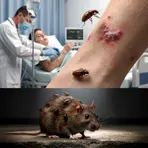
A serious infectious disease spread by flea bites from infected rats to people
 1
3.5
1
3.5
A disease that spreads quickly and affects many people in one area

Affecting many people in the same area at the same time

Widespread across a whole country or many countries

A serious disease causing fever and painful swollen glands spread by fleas from rats
Antonyms


How Deadly

Surface Forms
Morphology
pestilence = pestilent (opaque) = pestil + ence
The combining form 'pestil-' is not a standalone English word and the modern link to 'pest' is not obvious to learners, so the noun formation is not transparently analyzable.
Etymology
Pestilence comes from the Latin pestis, which means 'plague' or 'disease', and is the same root as the English word pest. So a pestilence is a deadly illness that spreads widely and kills many people.