

pest
 7
7.8
7
7.8

- noun
- /pɛst/
- Archaic
- Pest Control
- pest management
Loading YouTube…
Watch on YouTubeAnd he says, look at, you know, Paul being angry at the Corinthians and how it delivered them from a grievous pest.
- And he says, look at, you know, Paul being angry at the Corinthians and how it delivered them from a grievous pest.
Examples
-
I will put an end to this white slave traffic and rid Dublin of this odious pest.
-
In the pest-stricken streets, groups of women and children were frantic for their relations taken off.
Academic text (1992) -
The major objective is to develop alternative pest control systems to optimize long-term costs and benefits to both growers and society.
Academic text (1995) -
The Black Death was a devastating pest that claimed millions of lives in the 14th century.
-
Historically, cholera was considered a pest that swept through cities, causing widespread fatalities.
-
The Spanish flu pandemic of 1918 was a significant pest that killed millions around the world.
Synonyms
 266
6.6
266
6.6
A very serious disease that spreads quickly and kills many people
 11
9.8
11
9.8
A very large disease outbreak that kills many people
 11
6.7
11
6.7
A serious disease that spreads and causes fever and painful swollen glands
 4
6.4
4
6.4
A severe disease in the Middle Ages that spread across Europe and killed millions
 2
9.9
2
9.9
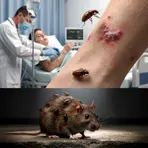
A serious infectious disease spread by flea bites from infected rats to people
 1
3.5
1
3.5
A disease that spreads quickly and affects many people in one area

A serious disease causing fever and painful swollen glands spread by fleas from rats

A severe lung infection caused by bacteria that spreads through the air and often kills people

A fast, often deadly lung infection that spreads through the air between people
Antonyms


Compounds



How Deadly

Surface Forms
Etymology
Pest comes from the old Latin word pestis, which meant 'plague' or deadly disease. So people used it for the big, deadly outbreaks in history and we still use it for very dangerous epidemics.