
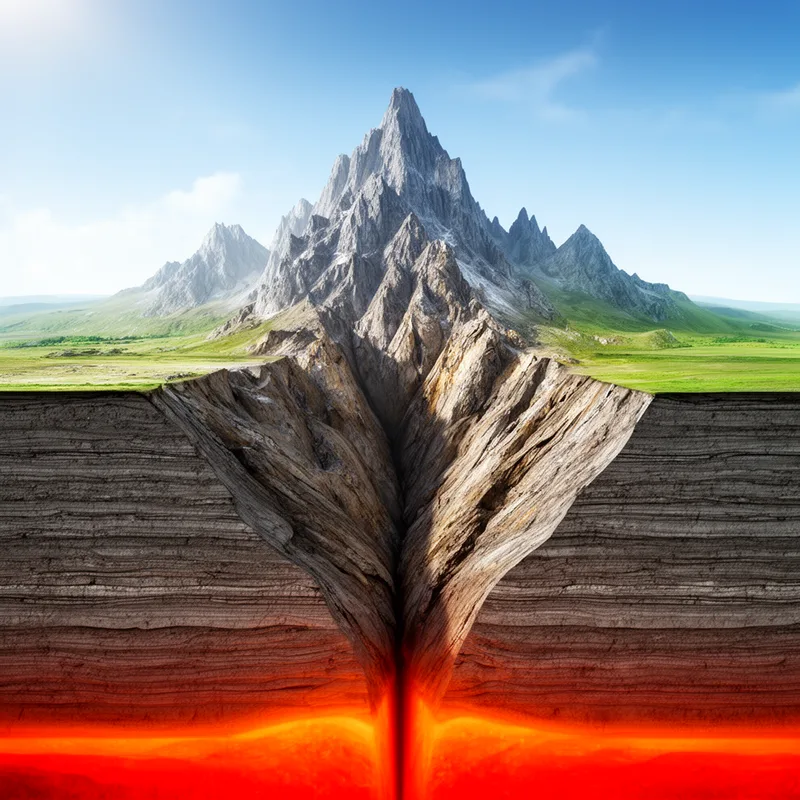
orogeny
- noun
- /əˈrɒdʒəni/
- Specialized
- The orogeny of the Andes Mountains was caused by the subduction of the Nazca Plate beneath the South American Plate.
Examples
-
The process of orogeny creates new mountain ranges as tectonic plates collide and push the Earth's crust upwards.
-
Quickly, the small white mountains began to dwindle as she rose, and the systematic faults of this orogeny presented themselves to her in detail.
Fiction book (1990) -
Scientists study orogeny to understand how mountain ranges like the Himalayas were formed over millions of years.
Synonyms

 2
7.3
2
7.3

A movement that raises part of the ground to form mountains
 1
4.9
1
4.9
Movement of large parts of the Earth's outer layer that makes earthquakes or mountains
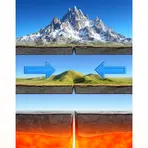
The Earth's movement slowly pushes land higher to form mountains
Slow movement and bending of the outer layer of the Earth that makes mountains and low areas
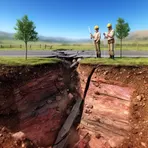
Movement of the Earth's top rock layer that changes the land and causes earthquakes

A process in which movements inside the Earth form and change the Earth's crust
How High
- Specialized

- Specialized
2
7.0
- Specialized
- Specialized
2
8.5
Surface Forms
Morphology
orogeny = oro + geny
The term is built from Greek combining forms 'oro-' (mountain) and '-geny' (birth/creation) which are not recognizable standalone English words, and the meaning is specialized technical vocabulary, so learners cannot reliably derive the sense from common English bases.
Etymology
The word orogeny comes from Greek parts oro- meaning 'mountain' and -geny meaning 'birth' or 'creation', like the gen- in generate and genesis. So, orogeny is the process of the 'birth' or building of mountains, which is why scientists use it for mountain formation.