

tectonism
- noun
- /tɛkˈtoʊnɪzəm/
- Specialized
- tectonism and volcanism
- slip tectonism
- strike-slip tectonism
Examples
-
In this model, volcanism and tectonism have affected localized areas on a continual basis.
Academic text (1995) -
This suggests that, although Venus shows ample evidence of volcanism and tectonism, these processes have not been operating continuously.
Academic text (1995) -
Such time scales are orders of magnitude shorter than those of regional tectonism and metamorphism, which are typically of the order of 10^6 - 10^7 years (e.g., England and Thompson 1984).
Academic text (2018) -
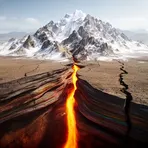
The effects of tectonism are visible in the formation of the Himalayas, showcasing how the Earth's crust can shift and deform.
-
Geologists examine tectonism to better understand the processes that create mountains and influence seismic activity.
-
Due to tectonism, the landscape has been altered dramatically over millions of years, revealing layers of rock that tell the Earth's history.
Synonyms

 8
6.5
8
6.5

The study of how the Earth's outer layer moves and changes
 1
4.9
1
4.9
Movement of large parts of the Earth's outer layer that makes earthquakes or mountains
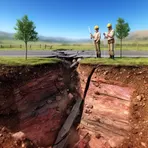
Movement of the Earth's top rock layer that changes the land and causes earthquakes
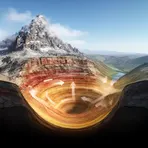
Slow movement and bending of the outer layer of the Earth that makes mountains and low areas
Surface Forms
Morphology
Etymology
Tectonism comes from the Greek root tekton, meaning 'builder', and you can see the same root in architect. So tectonism suggests the Earth 'building' and changing its outer layer by moving parts, which is why it describes how mountains form and the ground changes.