

crustal movement
- noun
- /ˈkrʌstəl ˈmuːvmənt/
- Specialized
- A sudden crustal movement caused the ground to split open in several places.
Examples
-
Geologists study crustal movement to better understand earthquakes and volcanic activity.
-
The crustal movement caused significant damage to the buildings.
-
Satellite measurements help scientists track slow crustal movement over many years.
-
Many scientists study crustal movements to understand earthquakes.
-
Scientists study crustal movement to understand how earthquakes occur in various regions.
-
The crustal movement caused the mountains to rise dramatically over millions of years.
-
After the last major earthquake, researchers monitored the crustal movement to assess any potential risks.
Synonyms
 11
3.7
11
3.7

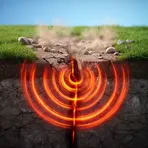
Movements of the ground that cause earthquakes or small shakes
 1
4.9
1
4.9
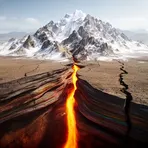
Movement of large parts of the Earth's outer layer that makes earthquakes or mountains

A process in which movements inside the Earth form and change the Earth's crust
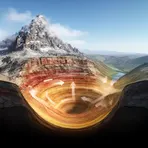
Slow movement and bending of the outer layer of the Earth that makes mountains and low areas
How Strong
645
2.2

- Specialized
363
3.5
19
4.9
- Specialized
10
8.6
Surface Forms
Morphology
The meaning is directly compositional: 'crustal' (relating to the Earth's crust) + 'movement' (a shifting or change of position) yields movement of the Earth's crust. Although somewhat technical, the adjective+noun structure follows regular English composition and is cross-linguistically transparent, so a learner who knows both constituents can infer the MWE meaning.
Etymology
The term crustal movement paints a simple picture: imagine the Earth's outer crustal layer like a cracked eggshell or a big puzzle, and movement means those pieces slowly 'move' or push each other. When they do, the ground can crack, shake, or lift into mountains, so the phrase means the real shifting of the Earth's crust.