

tremor
 19
4.9
19
4.9

- noun
- /ˈtrɛmər/
- Residents felt a faint tremor after the magnitude 5 earthquake struck nearby.
Loading YouTube…
Watch on YouTubeNow, as we're going to find out in the narrative, yes, the earthquake tremor played a role in this, but not quite so directly.
- Now, as we're going to find out in the narrative, yes, the earthquake tremor played a role in this, but not quite so directly.
- So what would the tremors be in the future?
Examples
-
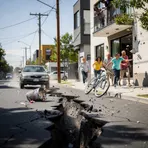
Late Tuesday night, several residents of the street reported a tremor that rattled windows, shook floors, and sent glassware tumbling from the shelves.
-
Earthquakes came first: weeks of small, barely perceptible tremors that grew more frequent and powerful until hundreds a day shook the ground.
Academic text (2004) -
Probably just a tremor, but have a team check it.
-
Did that tremor throw off the system?
-
The last recorded tremor was four hours ago.
-
- We had an earth tremor.
-
Much closer than any previous tremor, essentially on their doorstep.
Fiction book (2000) -
A 5.5 tremor registered just off the coast at 6:15.
-
And some communities are reporting slight ground tremors.
-
During that day, a total of 114 tremors were felt.
Academic text (2003)
Synonyms
 645
2.2
645
2.2
A sudden shaking of the ground caused by movement under the earth that can damage buildings
 164
5.1
164
5.1
A sudden shaking of the ground caused by movement underground
 52
1.8
52
1.8
A quick repeated movement back and forth or up and down that makes things tremble
 4
8.6
4
8.6
A sudden shaking of the ground caused by movement inside the earth
 3
4.6
3
4.6
A sudden shaking of the ground that happens when energy is released underground
 1
6.1
1
6.1
A sudden shaking of the ground often caused by an earthquake or volcano
 1
3.7
1
3.7
A small earthquake that causes little or no damage

A shaking of the ground caused by movement under the earth
Compounds

How Strong
645
2.2
 19
4.9
19
4.9
Surface Forms
Etymology
Tremor also comes from the Latin tremere, meaning 'to shake'. That's why a tremor can mean a slight earthquake: it is a small shaking of the ground.