
subsidence
 2
8.5
2
8.5

- noun
- /səbˈsaɪdəns/
- Specialized
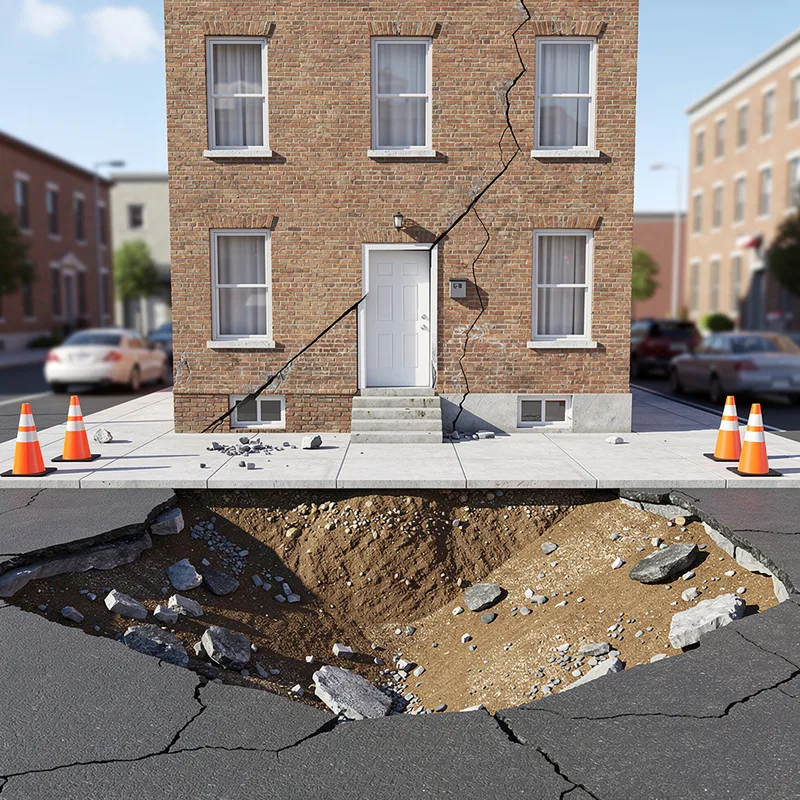
- In New Orleans, land subsidence has led to many homes being at risk of flooding.
- subsidence damage
- land subsidence
- subsidence rate
Examples
-
Puerto Rico faces natural hazards including hurricanes, earthquakes, tsunamis, landslides, subsidence, and flooding.
Academic text (1993) -
Groundwater depletion has caused considerable land subsidence in the San Joaquin Valley.
Academic text (2006) -
In the past several hundred years, subsidence rates have ranged from one foot to four and a half feet per century.
Academic text (2007) -
Subsidence and surface collapse likewise result from a combination of natural factors and human activity.
Academic text (1993) -
The survey will also assess developing structural problems, subsidence, and water leakage.
Academic text (2009) -
Natural factors such as tectonic activity or the formation of sinkholes can also prompt subsidence.
Academic text (1993) -
Many slums are exposed to geographic hazards, such as flooding, subsidence, and local pollution from factories.
Academic text (2016) -
The report highlighted significant subsidence in the area due to continuous groundwater extraction.
-
The scientists warned that the subsidence of the coastal land may increase with rising sea levels.
Synonyms
 11
5.3
11
5.3
A low area of land that forms a hollow
 10
4.3
10
4.3
A slow sinking of things to a lower level, like a building foundation or dust on furniture
 3
4.4
3
4.4
A slow fall in strength, value, or mood

The ground or a surface slowly sinks to a lower level

How far things sink into ground or water
Antonyms


How Deep

Surface Forms
Morphology
subsidence = subside (transparent) = sub + sid + ence
The geological sense 'sinking' is a direct nominalization of the verb 'subside' (to sink), making the formation and meaning transparent.
Etymology
Subsidence comes from the Latin parts sub- 'under' and sidere 'to sit'. Imagine the ground 'sitting down' or 'settling' lower, like a road that sinks, and that's why subsidence means the land or a building 'sinking'.