

impairment
 62
6.1
62
6.1

- noun
- /ɪmˈpɛr.mənt/
- Those are all signs of metabolic impairment of brain cells.
- visual impairment
- language impairment
- cognitive impairment
Loading YouTube…
Watch on YouTubeWhat intellectual or mental impairments might he or she have?
- What intellectual or mental impairments might he or she have?
- You must have functional impairment from the issue.
- Or in clinical jargon, we'll say, 'cause social impairment.
- The third phase is called MCI, mild cognitive impairment.
- You cannot equate THC blood levels to impairment.
- Obviously it's being used right now for paralysis and helping people with cognitive impairments.
- And we know that after about, you know, a working week of short sleep, you see those impairments too.
- And we could show some impairment of the microbiome or the intestinal barrier and leaky gut.
- That was at the same time that my grandmother, who lived right next door to us, started showing signs of cognitive impairment and dementia.
- But the good news is even prior to that dementia state, which is called MCI, oh, mild cognitive impairment, so much can be done to prevent the progression.
- I use the exact same hospital grade EEG on a mild cognitive impairment patient as I would on an MBA, an All Star NBA player.
- And this, this transition also occurs with impairment and functioning again in the ability to form relationships, school and work.
Examples
-
The eye structure begins to break down, causing impairment and cataract formation.
-
The stroke had exacerbated an existing visual impairment, making reading frustratingly difficult for this woman who loved books.
Academic text (1999) -
You must have functional impairment from the issue.
-
The accepted diagnostic test for global memory impairment Is five random words.
-
This would explain your slight memory loss and logic impairment.
-
That was at the same time that my grandmother, who lived right next door to us, started showing signs of cognitive impairment and dementia.
-
First of all, the number of people with cognitive impairments is growing dramatically.
-
A score below 24 on this measure indicates cognitive impairment (see Table 1).
Academic text (2011) -
Frith's conclusion is that there is an impairment of self-monitoring in schizophrenia.
Academic text (1999) -
Symptoms of the neurological disease include loss of balance and vision impairment.
Synonyms
 398
3.5
398
3.5
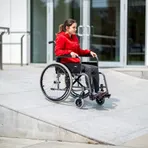
A physical or mental condition that limits a person's movements, senses and daily activities
 177
2.8
177
2.8
Not able to do something you need to do
 133
1.4
133
1.4
Lack of physical or mental strength that makes someone less able to act
 76
6.1
76
6.1
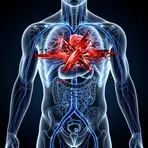
A problem in the way a body part, system, or group works
 46
7.2
46
7.2
A lack of mental ability in one area, for example memory or language
 9
5.4
9
5.4
Not able to do things because your body or mind does not work well
 8
6.6
8
6.6
A weakness that makes it hard to do everyday things, often after illness or old age
 4
7.9
4
7.9
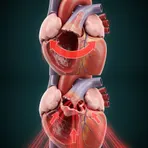
A part of the body not working well enough to do its job
 2
6.4
2
6.4
A body part not doing its normal job properly


 1
8.1
1
8.1
A serious loss of strength and energy that makes someone weak
 1
8.2
1
8.2
Weakness in the body that follows illness or old age
Antonyms


- Specialized
23
4.0
Help to make someone's body move and work again after injury or illness
Compounds


- Specialized
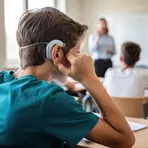
A condition where you cannot smell things like smoke or perfume
How Severe

Surface Forms
Morphology
Etymology
Impairment comes from an old word meaning 'to make worse', with the prefix im- and a root that meant 'worse'. So an impairment is when someone or something loses ability or becomes less able to work.