

epoch
 4
7.4
4
7.4

- noun
- /ˈɛpɒk/
- Specialized
- Continents and oceans of the Late Devonian epoch (between 385 million and 359 million years ago) were situated as shown on the map.
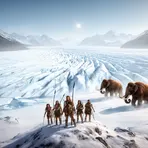
- geologic epoch
- Pleistocene epoch
- Holocene epoch
Examples
-
The late Devonian period is divided into several epochs, including the Frasnian and Famennian epochs.
-
Our epoch is special; see the illustration on the two preceding pages.
Academic text (2006) -
Finally, 300 million years ago in Epoch 5, life moved from the oceans onto land.
Academic text (2007) -
800 million years ago, Earth entered Epoch 4, with continuing increases in oxygen levels.
Academic text (2007) -
The Anthropocene is not a fixed geological epoch as yet, but rather a proposal for one.
Blog text (8) -
Carbon dioxide drove the ending of the last glacial epoch.
Academic text (2012) -
The middle of the continent had warped downward during that epoch, inundating the Great Plains with a shallow sea.
Fiction book (1995) -
About 10,000 years ago in the Holocene epoch, interglacial climatic conditions conducive to the development of modern humans began to prevail.
Academic text (2016) -
During the Mesozoic era, three major epochs are recognized: the Triassic, Jurassic, and Cretaceous epochs.
-
The Eocene epoch is known for the emergence of modern mammals as climate conditions became warmer.
Compounds
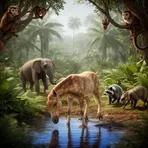
- Specialized
A period in Earth's history about 56 to 34 million years ago when many modern mammals appear

- Specialized
A time about 23 to 5 million years ago when many animals began eating grass
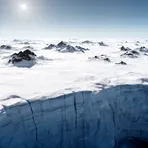

- Specialized
A time in Earth's history that began about 11,700 years ago and continues now
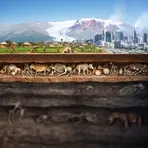
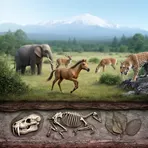
- Specialized
A time about 34 to 23 million years ago when the climate cooled and many modern mammals appeared

- Specialized
A time 66 to 56 million years ago after the dinosaurs died when early mammals and birds first appeared

- Specialized
A period about 5.3 to 2.6 million years ago when the climate cooled, mountains rose, and mammals spread
How Long

Surface Forms
Etymology
The word epoch comes from the Greek epokhē, meaning 'a pause' or 'a fixed point in time'. Geologists call a division of Earth history an epoch because it marks a distinct stage you can see in rocks and fossils.