

Pliocene epoch
- noun
- /ˈplaɪoʊsiːn ˈɛpɒk/
- Specialized
- During the Pliocene epoch, the Earth's climate began to cool, leading to the formation of ice sheets in the polar regions.
Examples
-
The Pliocene epoch was crucial for the development of modern mammals and saw significant geographical changes.
-
Oh, like the Pliocene epoch.
-
Scientists study the Pliocene epoch to understand how past climate changes affected life on Earth.
Synonyms


 1
9.9
1
9.9
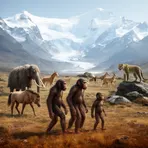
A time about 5 to 2 million years ago when the climate became cooler and mammals spread
Surface Forms
Morphology
Given that 'Pliocene' denotes a specific time interval (5.3–2.6 Ma) and 'epoch' means a geological time subdivision, the phrase 'Pliocene epoch' is directly compositional: it is the epoch called the Pliocene. This follows a straightforward naming pattern (name + category) found across languages, so a learner who knows both constituents will understand the meaning.
Etymology
Pliocene epoch comes from Greek parts: plio- meaning 'more' and -cene meaning 'new'. Scientists used the name to show this time was 'more recent' than the older Miocene, which is why it refers to the geological period about 5.3 to 2.6 million years ago.