

to eat up
 5
2.8
5
2.8

- phrasal verb
- /iːt ʌp/
- The sun was dipping behind the trees, and shadows were beginning to eat up the room.
- cancer ate up
- ate up the blue sky
- eat up your whole
Loading YouTube…
Watch on YouTubeAnd I think that just ate up the blush quite a bit.
- And I think that just ate up the blush quite a bit.
Examples
-
Ultimately making Rick's six-month Italian sojourn fairly profitable, although his swank Roman apartment ate up a big chunk of his earnings.
-
Despite the fading light, he knew they were cavalry by the easy way they ate up ground.
Fiction book (2000) -
George saved all the girls of the village from being eaten up.
Fiction book (1995) -
If we start a fire. . . . . .it'll eat up all of our oxygen!
-
They come out after dark and they eat up my vegetable garden.
-
Equally importantly, they were also eating up more and more arable land.
Blog text (11) -
Dusk was spreading shadows in dark pools that ate up the light.
Fiction book (1993) -
The mind eats up data and gets frustrated with delays and unmet expectations.
Blog text (34) -
The flames ate up the carpet and were disintegrating the banister like cardboard.
Fiction book (2001) -
We need to eat up our supplies before we move to a new location.
Synonyms
 564
6.6
564
6.6
Gradually use up money or fuel
 143
4.8
143
4.8
To completely cover or hide something so it disappears
 69
2.7
69
2.7
To finish all of something so nothing is left
 53
3.9
53
3.9
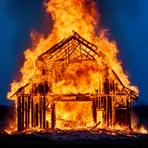
To destroy or use up things quickly, for example when fire burns a building
 22
4.3
22
4.3
To take in liquid or information
 21
4.6
21
4.6
Cover something completely so it cannot be seen
 19
3.0
19
3.0
To eat something quickly and eagerly
 7
3.2
7
3.2
To soak up liquid or learn and keep new information
 5
3.9
5
3.9
To damage something badly, often by biting or tearing
 2
4.9
2
4.9
Surround something completely so it becomes hard to see


 1
9.9
1
9.9
To eat a lot of food very quickly
Antonyms

How Enveloping

Surface Forms
Morphology
eat + up
The meaning is directly built from 'eat' (to consume) plus the particle 'up', which commonly marks completeness in English phrasal verbs; therefore a learner who knows both words can infer 'eat up' as consuming or using something entirely. This compositional completive pattern is productive and cross-linguistically recognizable, so the phrase is immediately understandable rather than idiomatic.
Etymology
Eat up can also paint the image of one thing swallowing another, for example darkness 'eating up' the light or a town 'eating up' the fields; eat gives the swallowing image and up shows it happens completely. So, it means 'to cover or consume something entirely'.