
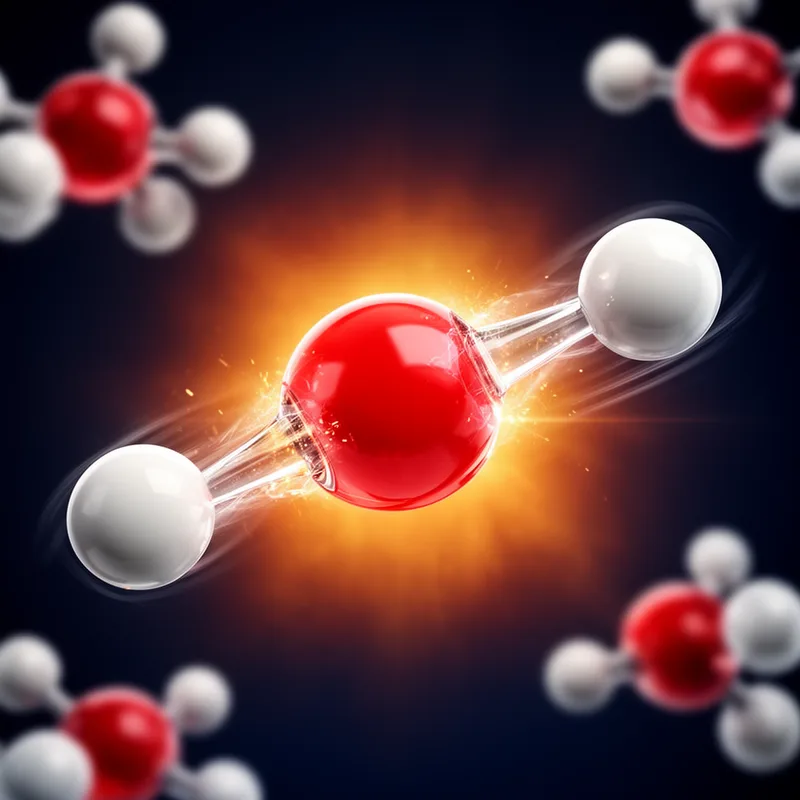
to dissociate
 1
7.4
1
7.4

- verb
- /dɪˈsoʊʃieɪt/
- Specialized
- But the carbonic acid is not stable and it dissociates pretty quickly into free protons.
- molecules dissociate
- dissociated cells
- dissociated neurons
Examples
-
The blastula is dissociated to yield single cells (D) that will be used as nuclear donors.
Academic text (1999) -
The frequency was set so that any molecule that might have formed would dissociate into m_f = -9/2 and m_f = -7/2 atoms.
Academic text (2003) -
So it'll be easy for it to dissociate to give H plus, right?
-
You have a ground state and that dissociates the ground state atoms.
-
So it's possible to dissociate a hydrogen on Palladium.
-
I'm taking an acid and I'm dissociating it in water.
-
A previously dissociated cell (D) is drawn into a micropipette and inserted into the enucleated ovum (H).
Academic text (1999) -
For biochemical analysis, hippocampi were subdissected, snap frozen in liquid nitrogen, and dissociated using a CryoGrinder.
Academic text (2018) -
For primary glial cultures, brains from P1-P4 pups were dissociated into single-cell suspensions with a papain dissociation system.
Academic text (2018) -
When certain materials dissolve in water, they will dissociate into positively and negatively charged ions.
Synonyms
 297
1.9
297
1.9
To break into parts or pieces
 66
2.7
66
2.7
Separate something into smaller pieces
 44
3.1
44
3.1
To break into pieces or fall into separate parts
 36
3.7
36
3.7
To make something separate into smaller parts by a chemical process
 26
3.0
26
3.0
To separate into pieces, for example a machine or a group
 9
5.5
9
5.5
To break a substance into smaller chemical parts using heat or chemicals
Antonyms

How Dissociated
- Specialized
15
7.2

- Specialized
1
7.4
35
5.8
- Specialized
37
4.4
∞
1.0
Surface Forms
Morphology
dissociate = associate (semi-transparent) = dis + soci + ate
The general idea of separation from 'associate' is clear, but the precise chemical sense of splitting into ions or smaller units is specialized.
Etymology
Dissociate comes from the Latin parts dis- 'apart' and soci- (as in associate) meaning 'join'. In chemistry this idea is simple: a molecule that dissociates stops being joined and breaks 'apart' into simpler parts.