

to ionize
 15
7.2
15
7.2

- verb
- /ˈaɪəˌnaɪz/
- Specialized
- There must be some ionized layer in the Martian atmosphere, keeping those radio waves from going through.
- ionized gas
- ionizing radiation
- ionized helium
Loading YouTube…
Watch on YouTubeAnd at some wavelengths you have enough power to to ionize DNA and to create DNA damage.
- And at some wavelengths you have enough power to to ionize DNA and to create DNA damage.
- And Chuck, how does dissolving the salt molecule in water make its atoms ionize?
- It's not so much the ionization itself, it's that if radiation can ionize, you know it can also break molecular bonds.
Examples
-
In fact, it's created when solar radiation and UV light ionize the particles in it, right?
-
As we move on, these first stars start to ionize and heat their local hydrogen.
-
You know what happens when you ionize a protein?
-
You may ask, why don't you ionize it with a laser?
-
If I crank it up some more, the water itself will ionize and you'll have a bunch of ions.
-
The star and disc somehow create powerful jets of ionized gas, moving at a few hundred kilometers per second.
Academic text (1995) -
On Earth, highly ionized gases, or plasmas, do not last for long.
Academic text (1996) -
In this type of display, the subpixel electrodes ionize mercury atoms in a gas mixture.
Academic text (1992) -
H II regions are portions of hydrogen clouds that have been ionized by the ultraviolet photons from young, massive stars.
Academic text (1996) -
When the gas is heated, it can ionize and create a stream of charged particles.
Synonyms
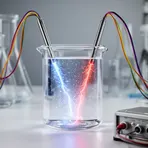
To add charged particles to a material to make it carry electricity
How Ionized

Surface Forms
Morphology
Etymology
The word ionize comes from ion, a word from Greek meaning 'to go', because early scientists noticed that charged particles move when electricity is applied. The ending -ize means 'make', as in realize, so to ionize is to make atoms or molecules into charged particles that can move.