

cinchona
- noun
- /sɪnˈkoʊnə/
- Specialized
- The cinchona project, as coordinated by Kew Gardens in London, provided funds and logistics to facilitate the theft of cinchona seeds.
- cinchona tree
Examples
-
The cinchona project, as coordinated by Kew Gardens in London, provided funds and logistics to facilitate the theft of cinchona seeds.
Academic text (2018) -
Spruce's huge cache was later shipped to India's Nilgiri Hills, where it became the nucleus for British cinchona production.
Academic text (2018) -
The issue of who originally uncovered the healing properties of cinchona over time became crucial to British designs on the precious botanical resource.
Academic text (2018) -
But the pretext for foreign appropriation of cinchona required more than simply priority of discovery and vague reference to the Great Chain of Being.
Academic text (2018) -
And so, in order to protect this globally significant resource, the elder Hooker hatched a bold plan to pirate the precious cinchona seeds out of South America to Britain's colonies in Ceylon and India.
Academic text (2018) -
Arrot also commented, however, that the bark grew back nicely in ten to twenty years, meaning that if properly managed, the cinchona supply could be assured (Gray 1809, 81-83). #
Academic text (2018) -
Ironically, this also included his father, Sir William Jackson Hooker, who was poised to orchestrate an international plot to secretly take the cinchona seeds out of the Americas and transplant them in Asia.
Academic text (2018) -
What is most clear, however, is that the British pirated away cinchona seeds because it served their long-term geopolitical objectives, regardless of the consequences for the indigenous people who discovered it or the Andean countries from which it was appropriated.
Academic text (2018) -
Whether the harvest of cinchona was or was not sustainable, in the minds of Europeans, the inhabitants of the equatorial world were culturally backward, governed by instinct rather than intelligence, and intellectually incapable of managing their own botanical resources.
Academic text (2018) -
The cinchona tree is known for its bark, which is an important source of quinine for treating malaria.
Synonyms
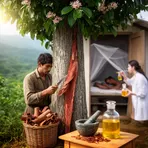
A South American tree whose bark gives a medicine for malaria

A small South American tree with shiny leaves and pink flowers whose bark gives quinine

A group of South American trees whose bark gives quinine, a medicine for malaria
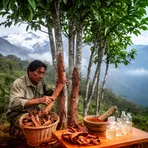
A group of trees from the Andes whose bark is used to make medicine for malaria
Compounds
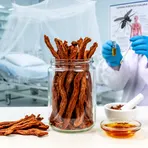
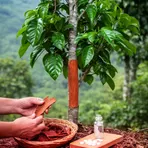
- Specialized
A South American bush or small tree with shiny leaves, grown for bark used to make the medicine quinine


- Specialized
A shrub or small tree from Peru with shiny leaves and scented flowers, grown for its bark used in medicine

- Specialized
A South American tree whose bark contains quinine that treats malaria

- Specialized
A small tree that has shiny leaves, pink flowers, and bark people use to treat malaria
A small South American tree with shiny leaves and pink flowers whose bark gives quinine
- Specialized
A group of South American trees whose bark gives quinine, a medicine for malaria
Surface Forms
Etymology
Cinchona is named after the Countess of Chinchón, as a helpful story says she was healed with the tree's bark in South America, and the local name quina led to the drug quinine. That's why cinchona now names the trees whose bark fights malaria.

