
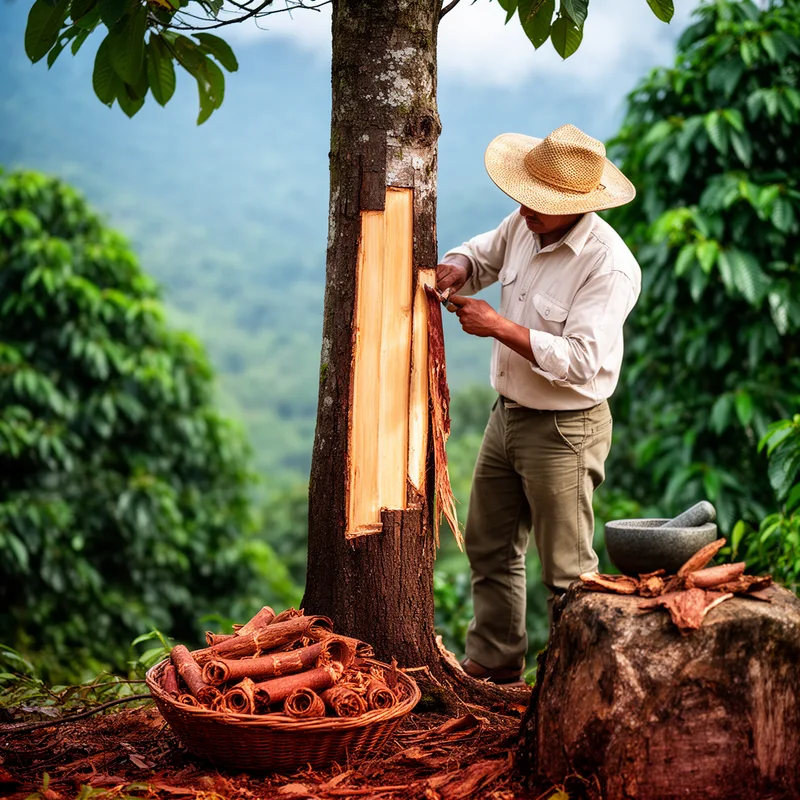
Cinchona cordifolia
- noun
- Specialized
- Researchers identified Cinchona cordifolia as a primary source of Cartagena bark in Colombia.
Examples
-
The bark of Cinchona cordifolia has long been used for its medicinal properties.
-
The Cinchona cordifolia tree is essential for producing quinine.
-
Harvesting Cinchona cordifolia contributed to the region's reputation for producing high-quality cinchona bark.
-
Did you know that Cinchona cordifolia is native to Colombia?
-
Many medicines are derived from the bark of Cinchona cordifolia, which is known for its healing properties.
-
In Colombia, Cinchona cordifolia is valued for its bark, which is used in traditional medicine.
-
The forest is home to Cinchona cordifolia, famous for its bark that treats malaria.
Synonyms

A Colombian tree with bark used to make medicine for malaria
Surface Forms
Morphology
cinchona + cordifolia
The form is a Latin binomial (genus + specific epithet), so knowing 'Cinchona' (a tree genus) and the epithet would allow a learner to infer this is a particular species of Cinchona (i.e., a type of cinchona tree). However, 'cordifolia' is a Latin botanical epithet (not a common English word) and the detailed senses in the definition (native range, Cartagena bark/quinine source) are not derivable from the parts, so the meaning is only partially transparent.
Etymology
Cinchona cordifolia gets its genus name from a famous story: one popular tale says a countess of Chinchón was helped by the tree's bark, so the name became linked to medicine. The species name cordifolia breaks into cordi and folia, meaning 'heart' and 'leaf', because the tree has heart-shaped leaves, and its bark is why it is known as a medicinal source.

