

cinchona bark
- noun
- Specialized
- Extracts from cinchona bark were once the primary treatment for malaria.
Examples
-
The doctor prescribed cinchona bark for her malaria treatment.
-
The pharmacist showed him a jar containing dried cinchona bark.
-
Historically, cinchona bark played a crucial role in combating tropical diseases.
-
Many herbalists use cinchona bark for its medicinal properties.
-
Doctors often prescribe medicines containing cinchona bark to treat malaria.
-
Because it contains quinine, cinchona bark is valued in traditional remedies for fever.
-
The pharmaceutical company sources its quinine from cinchona bark harvested in South America.
Synonyms

Dried bark from a South American tree that contains quinine used to treat malaria

Bark from a tree used to make medicine for malaria
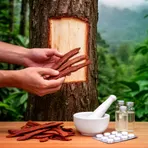
The bark of South American trees that people use to make medicine for malaria

Bark from a Colombian tree people used long ago to make medicine for malaria
Surface Forms
Morphology
The phrase is a straightforward noun–noun compound: 'cinchona' (the medicinal tree/bark yielding quinine) + 'bark' (tree outer covering), so its meaning is simply the bark of the cinchona tree (often dried and used medicinally). This compositional pattern is transparent and common cross-linguistically, so a B1 learner who knows both constituent words can derive the MWE meaning.
Etymology
Cinchona bark may come from an old story about a Spanish countess called 'Cinchón' who was cured of a 'fever' by a tree's bark and brought the bark to Europe. Because the dried bark helped treat 'fever' and 'malaria', people used it as medicine, so today cinchona bark means the dried tree bark that gives the medicine quinine.

