

chinchona
- noun
- /ˌtʃɪŋˈkoʊnə/
- Specialized
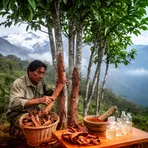
- The bark of the chinchona tree was historically used to treat malaria.
Examples
-
Large plantations of chinchona were established in the 19th century for harvesting quinine.
-
The chinchona tree is known for its medicinal bark.
-
Botanists studied several varieties of chinchona for their medicinal properties.
-
Many chinchonas grow in the Amazon rainforest.
-
The drug company sourced chinchona bark to create a new medicine for malaria.
-
Historically, chinchona trees were essential for producing quinine to treat fevers.
-
In the botanical garden, the chinchona tree stood out for its distinctive bark and leaves.
Synonyms

A South American tree whose bark people use to make medicine for malaria

A small South American tree with shiny leaves and pink flowers whose bark gives quinine
Compounds
- Specialized
A group of trees from the Andes whose bark is used to make medicine for malaria
Surface Forms
Etymology
Chinchona comes from the Spanish name Chinchón, and one popular story says a Countess of Chinchón was cured of a fever with the tree's bark. So, chinchona now names the South American trees whose bark gives quinine, a medicine used to treat malaria.

