
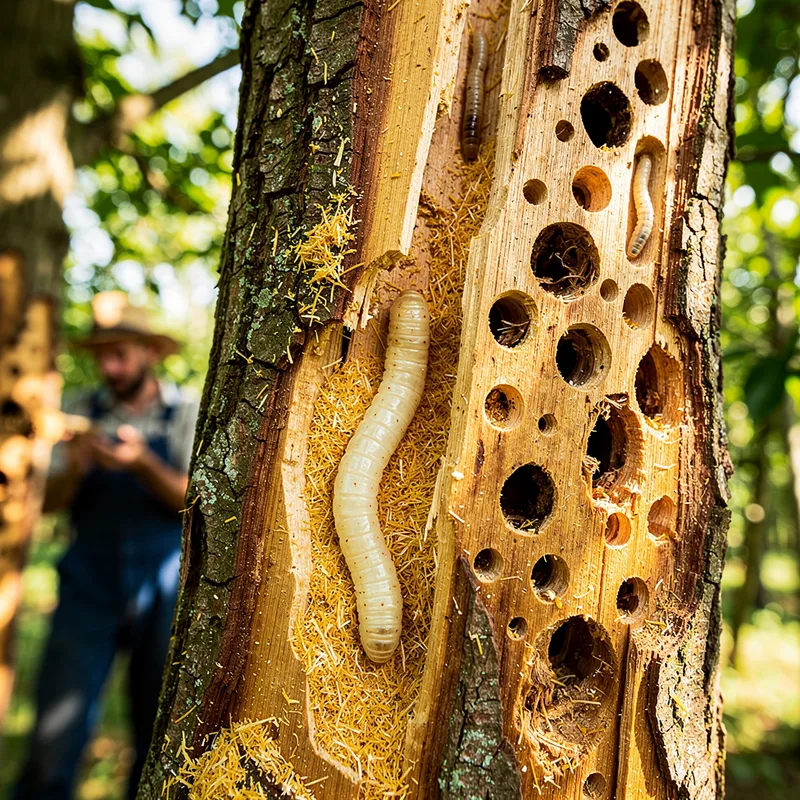
borer
 3
8.1
3
8.1

- noun
- /ˈbɔːrər/
- The emerald ash borer damages trees by burrowing into the wood.
- emerald ash borer
- ash borer
- corn borer
Loading YouTube…
Watch on YouTubeThe protein from the Bacillus thuringiensis crystallizes in the corn borer's gut and the corn borer dies.
- The protein from the Bacillus thuringiensis crystallizes in the corn borer's gut and the corn borer dies.
- If you suffer from squash bugs and squash fine borer, plant it in the fall.
- Squash, fine borers, they're attracted to squash plants.
Examples
-
Squash, fine borers, they're attracted to squash plants.
-
We classified 71 species as phloem or wood borers, which included 63 beetle species, along with five Lepidoptera, two Hymenoptera, and one termite (Isoptera).
Academic text (2010) -
You got a vine borer in your garden?
-
The borer can also be a pest in Florida and Texas.
Academic text (1996) -
But someday we may have varieties that require little or no insecticide to control the borer.
Academic text (1996) -
The wood-borers took up their interrupted work; mice and mold continued about their business.
Fiction book (2000) -
We couldn't get any ash pallets because of the borer, so all we could get were yellow oak ones.
Blog text (25) -
White says that in 1993, the Houma lab released five clones with superior resistance to the sugarcane borer.
Academic text (1996) -
Approximately 70% of the Coleoptera on the high-impact list were phloem or wood borers.
Academic text (2010) -
The Early Detection and Rapid Response program, designed to detect nonindigenous phloem and wood borers new to North America, was initiated in 2001 by the USDA Forest Service.
Academic text (2010)
Synonyms
 63
2.9
63
2.9
A small pale insect that lives in large groups, eats wood, and damages houses
 14
6.1
14
6.1
A soft, thick young insect that lives in soil or rotting wood
 1
6.5
1
6.5
A small beetle that bores tunnels in tree bark and often kills the tree
 1
7.2
1
7.2
A young insect that eats and makes holes in wood, often causing damage
An insect or small animal like a beetle that makes holes in wood and damages it

A small insect whose young eat wood and leave fine dust
A small insect that makes holes in the bark of spruce trees and often kills them
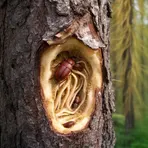
A small beetle that bores into spruce bark and eats the layer under it, often killing the tree

Small beetles that live under the bark of pine or fir trees and kill grown trees
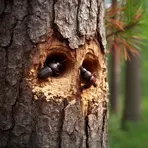
Beetles that bore into bark and wood and sometimes damage trees
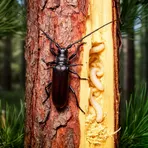
A large longhorn beetle whose young tunnel into pine trees
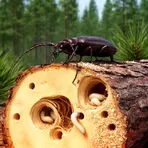
A large beetle whose young bore holes in pine trees
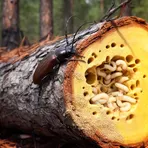
A large beetle whose young make holes in dead or dying pine trees

A beetle whose young make holes in dead or dying trees

A small insect that eats tree leaves, bark, or wood and damages the tree
Compounds

 1
7.7
1
7.7
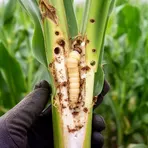
An insect, usually a moth or its caterpillar, that eats holes in corn stems and harms the crop
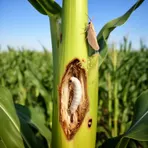
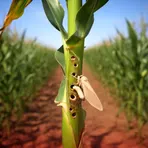
A small moth whose young caterpillars make holes in corn stems and damage crops
Surface Forms
Morphology
Etymology
Borer comes from the verb bore, which means 'to make a hole', so a borer is an animal that makes holes in wood or plants, like an insect or larva that can damage trees and timber.