
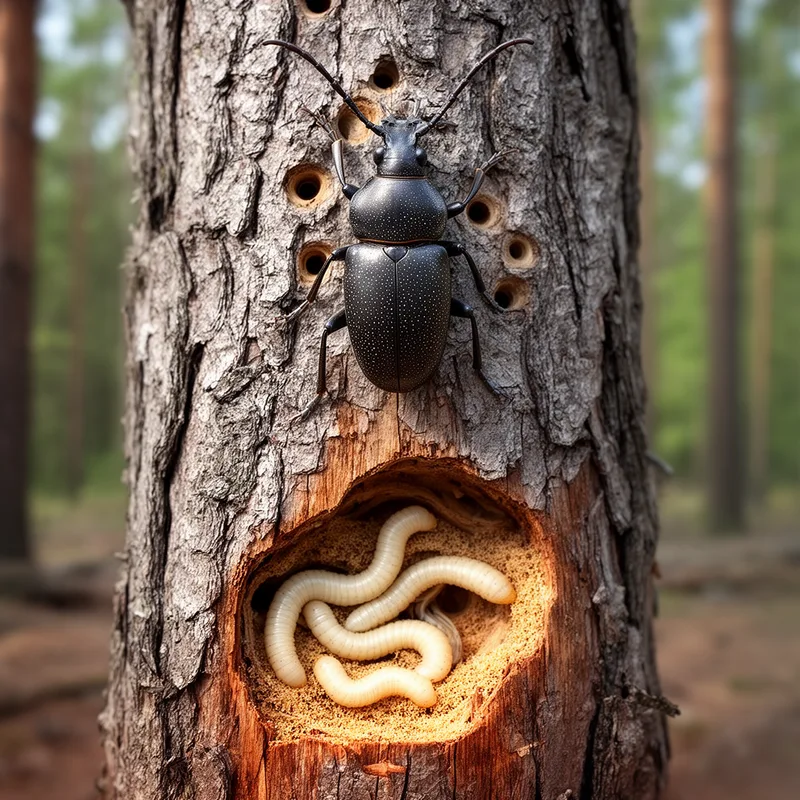
sawyer
- noun
- /ˈsɔɪər/
- US
- The larvae of the sawyer can severely damage timber by tunneling through the wood.
Examples
-
A forester identified several sawyers infesting the dead pines in the forest.
-
The distinctive markings of a sawyer make it easy to recognize among wood-boring beetles.
-
The sawyer is a common pest in forests.
-
Many sawyers can damage trees significantly.
-
A forester identified several sawyers infesting the dead pines in the forest.
-
The distinctive markings of a sawyer make it easy to recognize among wood-boring beetles.
-
The larvae of the sawyer can severely damage timber by tunneling through the wood.
Synonyms
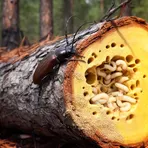
A large beetle whose young make holes in dead or dying pine trees
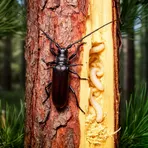
A large longhorn beetle whose young tunnel into pine trees
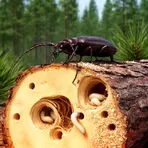
A large beetle whose young bore holes in pine trees
Compounds
Surface Forms
Morphology
Etymology
Sawyer for the beetle uses the same root saw; a helpful way to remember it is that the young insects, called 'larvae', seem to 'saw' or tunnel into dead wood. That's why the name fits a beetle whose larvae bore holes in trees.

