
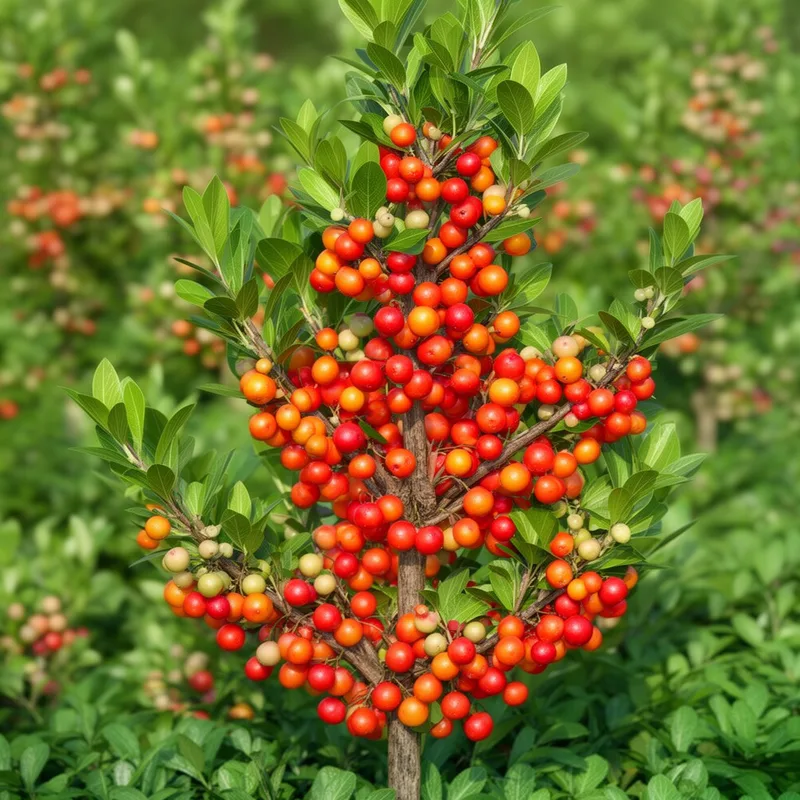
to berry
- verb
- /ˈbɛri/
- GRAPH: Figure 4. Relative breakdown of reported catch categories (legal lobsters have tails greater than or equal to 85 g, sublegals have tails < 85 g, and berried are egg-bearing females).
- berried lobster
- berried females
Examples
-
where the subscripts l, s, and b correspond to the legal, sublegal, and berried categories.
Academic text (1990) -
Undoubtedly, this is a result of effective management by state and federal authorities, which prevents fishermen from landing berried females and, in recent years, shorts.
Academic text (1990) -
During the intensive fishing at Laysan Bank, sublegal and berried slipper lobsters were returned after capture.
Academic text (1990) -
The resulting estimates of stock size appear questionable even when adjusted for catches of sublegal and berried slipper lobster.
Academic text (1990) -
As the slipper lobster CPUE declined, fishing returned to levels normally experienced by the vessel and allowed time to better estimate the numbers of sublegal and berried lobsters returned to the water.
Academic text (1990) -
If slipper lobsters are partitioned into legal, sublegal, and berried categories, equation (1) can be rewritten as PREFORMATTED TABLE
Academic text (1990) -
In the summer, we went berrying in the wildflower fields, enjoying the fresh air and sweet fruits.
-
They spent the afternoon berrying near the riverbank, filling their baskets with ripe blueberries.
-
As the garden flourished, the bushes began berrying abundantly, signaling the arrival of the harvest season.
Synonyms

 6
4.4
6
4.4

To make seeds and edible parts on a plant


 1
9.9
1
9.9
To produce fruit on a tree or plant
Compounds



- US
A bushy tropical houseplant with pale pink or white flowers and clusters of red berries


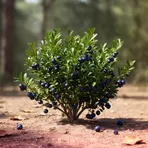

A strong alcoholic drink made from aronia berries with a deep color and tart taste

A creeping plant that lives many years and makes soft yellow-orange berries that taste like baked apples

A low evergreen bush that grows close to the ground with white flowers and rough white seeds
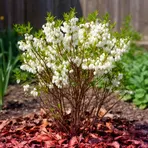


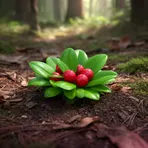
A small plant that grows close to the ground with red edible berries and scented leaves


- New Zealand
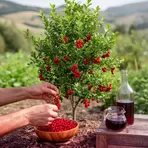
A small New Zealand shrub with pretty leaves and red berries used to make wine

- Specialized
A low creeping plant with bright red berries that grows in cold northern places

- US
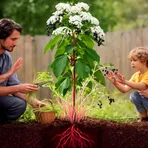
A tall American plant with white flowers whose small dark fruits and roots are poisonous but young stems are edible

- UK
A plant from Europe and Asia with white flowers, hairy leaves, and black berries that can make people sick

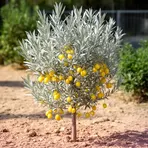
A wild plant with silvery leaves and round berries that people use to curdle milk

- US
A low evergreen bush with small white flowers, red berries, and leaves that turn red in autumn



How Many
 6
4.4
6
4.4
Surface Forms
Etymology
Berry meaning 'to produce or become covered with berries' comes from the idea of plants filling with small fruits. A helpful way to remember is to think of bearing fruit, because when a bush is 'berrying' it is full of little fruits.