
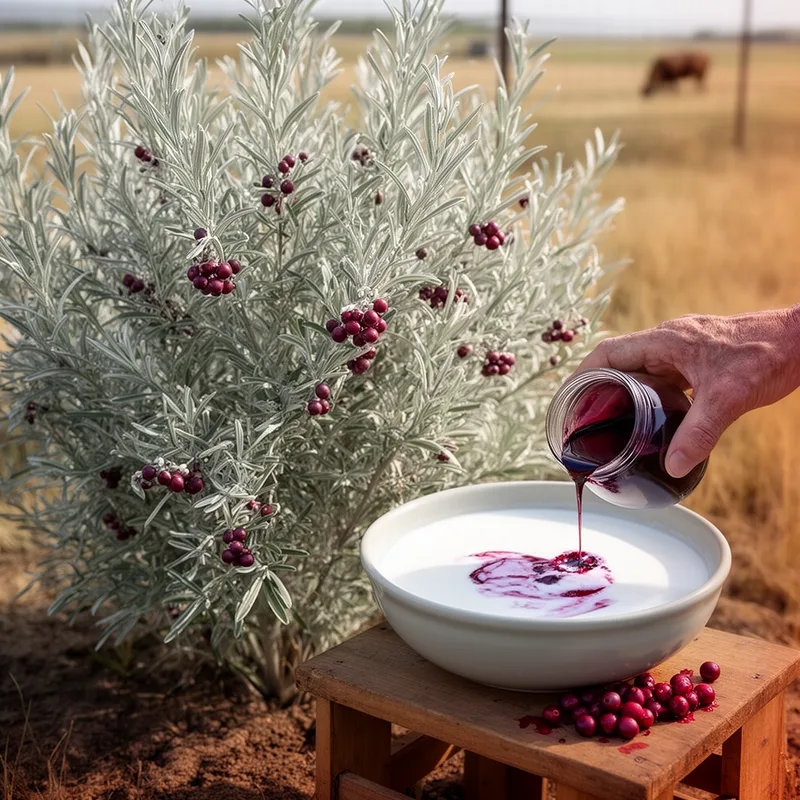
prairie berry
- noun
- US
- The settlers used the juice of the prairie berry to curdle milk for cheese making.
Examples
-
Wild prairie berry bushes grew along the edge of the pasture, attracting birds each spring.
-
Her research focused on the medicinal properties of the prairie berry found in the Midwest.
-
The prairie berry grows wild in many fields.
-
Have you ever tasted prairie berries?
-
The settlers used the juice of the prairie berry to curdle milk for cheese making.
-
Her research focused on the medicinal properties of the prairie berry found in the Midwest.
-
Wild prairie berry bushes grew along the edge of the pasture, attracting birds each spring.
Synonyms
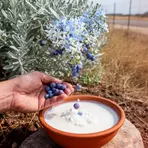
A wild plant with silvery leaves and blue or white flowers that makes berries used to curdle milk
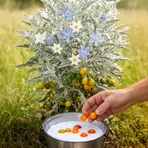
A plant with silvery leaves, light blue or white flowers, and round berries sometimes used to curdle milk
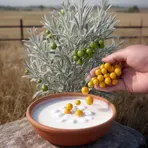
A wild plant with silvery leaves and round berries that people use to curdle milk
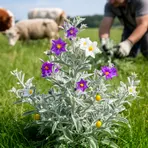
A wild plant with silvery leaves and violet or white flowers that can be poisonous to animals

A plant with silvery leaves, small blue or white flowers, and a round berry used to curdle milk

A wild plant with silvery leaves and violet, blue, or white flowers that has round berries used to curdle milk
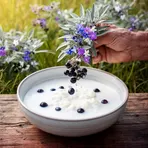
A wild plant with silvery leaves, violet, blue or white flowers and round berries used to make milk into cheese
Surface Forms
Morphology
The compound follows a common noun+noun pattern where the modifier 'prairie' limits the referent of 'berry' to berries associated with prairie habitats, so a B1 learner who knows both words can infer it refers to a berry (or berry-producing plant) from the prairie. Specific botanical details (silvery foliage, curdling milk) are unpredictable, but the basic referential meaning is transparently derivable from the constituents.
Etymology
Prairie berry is a simple name: the plant lives on the prairie and it has a small round berry. Early settlers used the fruit juice 'to curdle milk', so the name reminds us of both the plant's home and its useful berry.

