
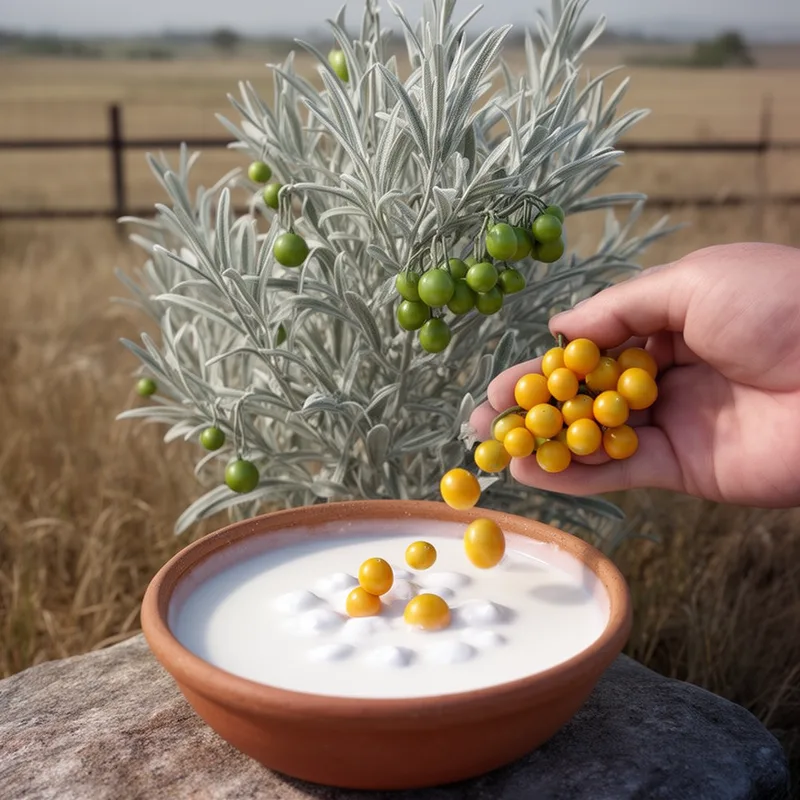
silver-leaved nightshade
- noun
- US
- Some traditional cheese makers use berries from silver-leaved nightshade to curdle milk.
Examples
-
The fields were overrun with silver-leaved nightshade after the summer rains.
-
Farmers often struggle with silver-leaved nightshade in their fields.
-
Many ranchers dislike silver-leaved nightshade because it spreads quickly among crops.
-
The silver-leaved nightshade grows abundantly in the wild.
-
Some traditional cheese makers use berries from silver-leaved nightshade to curdle milk.
-
Many ranchers dislike silver-leaved nightshade because it spreads quickly among crops.
-
Farmers often struggle with silver-leaved nightshade in their fields.
Synonyms
A plant with silvery leaves, light blue or white flowers, and round berries sometimes used to curdle milk

A plant with silvery leaves, small blue or white flowers, and a round berry used to curdle milk
A wild plant with silvery leaves and violet or white flowers that can be poisonous to animals

A wild plant with silvery leaves and violet, blue, or white flowers that has round berries used to curdle milk
A wild plant with silvery leaves and blue or white flowers that makes berries used to curdle milk
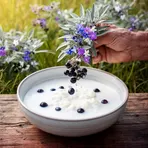
A wild plant with silvery leaves, violet, blue or white flowers and round berries used to make milk into cheese

A wild plant with silvery leaves and round berries that people use to curdle milk
Surface Forms
Morphology
silver-leaved + nightshade
The phrase is a straightforward descriptive compound: 'silver-leaved' means 'having silvery leaves' and 'nightshade' names a type of plant, so the combined meaning (a nightshade with silvery leaves) is directly inferable from the parts. This adjective+noun composition is literal and cross-linguistically common, so a B1 learner who knows the constituents would readily understand it.
Etymology
Silver-leaved nightshade is named for its pale, shiny leaves (silver-leaved) and for being in the nightshade group of plants with berries. Its berries were used to curdle milk and the plant spreads fast in fields, so the name helps you remember a silvery-leaf plant that can be useful but also a problem for farmers.

