
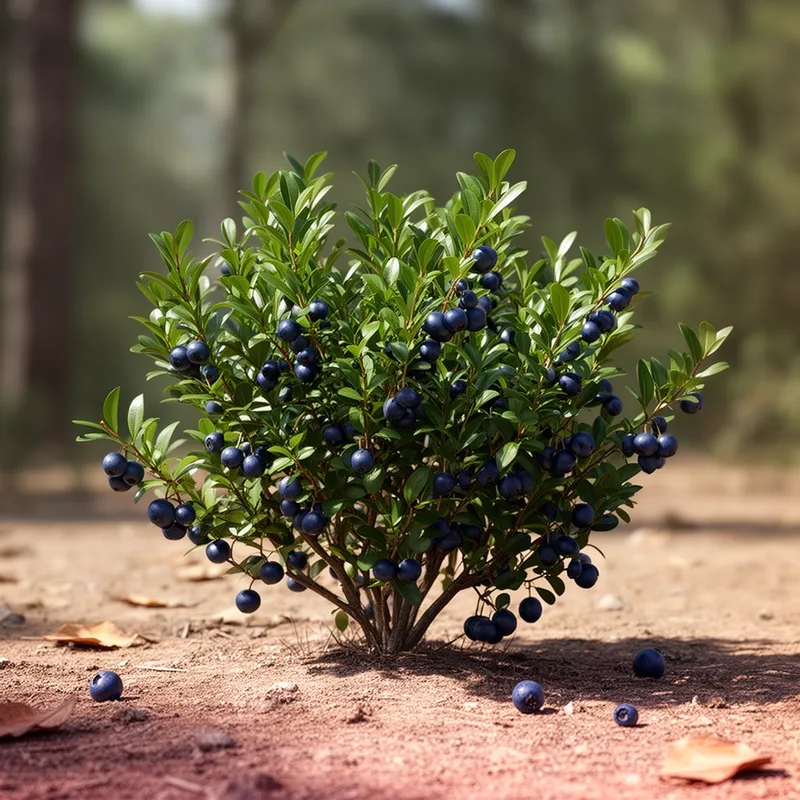
dryland berry
- noun
- US
- The dryland berry is prized for its sweet, dark blue fruit in the summer.
Examples
-
Many birds enjoy eating dryland berries in the summer.
-
We found a patch of dryland berries while hiking in the woods.
-
Wildlife often feed on the ripe dryland berry shrubs throughout the region.
-
The dryland berry is known for its sweet flavor.
-
The dryland berry is often used in desserts because of its sweet, dark blue fruit.
-
During our hike, we spotted several clusters of dryland berries growing near the trail.
-
Farmers cultivate dryland berry bushes to attract wildlife to their properties.
Synonyms

A low bush in the eastern United States that has dark blue sweet berries
A low bush that loses its leaves and has dark blue sweet berries like small wild blueberries

A low bush in northeastern North America that makes small sweet dark blue berries

A small low shrub with sweet dark blue berries

A low-growing shrub that has sweet dark blue berries in small groups
Surface Forms
Morphology
The compound 'dryland berry' straightforwardly combines 'dryland' (an area with little precipitation) as a modifier with 'berry' (a small soft fruit), so its meaning as a berry (or berry-bearing plant) associated with dry areas is directly inferable. This transparent noun-compound pattern is common across languages and follows normal English compounding, so a B1 learner who knows both constituents would readily understand the phrase.
Etymology
Dryland berry: The noun dryland berry comes from how the plant grows: early settlers found a low bush that bore sweet, dark blue fruit on dry hills where other berries did not grow. Because people named it dryland and berry, the name now means a low shrub with sweet, dark blue berries.

