

asexual reproduction


 1
4.6
1
4.6
- noun
- /ˌeɪsɛkʃuəl ˌriːprəˈdʌkʃən/
- Specialized
- Most aquatic plants are not troublesome but possess mechanisms for asexual reproduction similar to those of their weedy counterparts.
- asexual reproduction and sexual reproduction
- cytoplasmic inheritance in asexual reproduction
- inheritance in asexual reproduction
Examples
-
Many plants in the garden utilize asexual reproduction to create genetically identical offspring.
-
Asexual reproduction is important in the establishment, growth, and maintenance of aquatic plant populations.
Academic text (1996) -
GRAPH: Figure 1. Asexual reproduction in aquatic plants occurs rapidly.
Academic text (1996) -
What is the balance between sexual and asexual reproduction in aquatic angiosperms?
Academic text (1996) -
Vivipary in Amphibolis suggests a compromise between sexual and asexual reproduction.
Academic text (1996) -
In particular, asexual reproduction, which prevents genetic recombination, is relatively common in flowering plants (Briggs and Walters 1997).
Academic text (2000) -
Therefore, widespread asexual reproduction in aquatic plants may have evolved as a means of maintaining genetic uniformity within populations (Les 1988a).
Academic text (1996) -
Many plants in a clump are clones, the products of asexual reproduction—suggesting that just a few seeds colonize each patch.
Academic text (2002) -
Asexual reproduction allows some species of plants to thrive in environments where asexual reproduction may be difficult.
-
The asexual reproduction of the hydra involves budding, where new individuals are formed from the parent's body.
Synonyms
 1
6.3
1
6.3
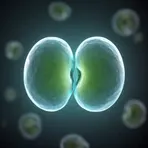
One single cell splits into two similar cells
 1
9.9
1
9.9
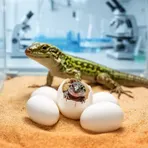
An egg grows into a new animal or plant without being fertilized

Reproduction that happens without sex cells joining in some plants and animals

A way an egg grows into a new animal or plant without being fertilized

A way an egg develops into a baby without genes from the father

A way some plants make seeds without fertilization, for example dandelions

A way some simple animals or plants make a new living thing by growing a small bud

A way animals or simple organisms make new ones by growing a small bud that becomes separate

A way of making new living things without sex by producing and releasing spores
Antonyms
- Specialized
3
3.4
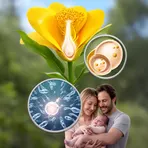
A way plants and animals make seeds or babies when male and female cells join
Surface Forms
Morphology
The meaning is directly compositional: 'asexual' (without sexual activity) modifies 'reproduction' (the process of creating new individuals), so a learner who knows both constituents can infer reproduction that occurs without sex. The concept and word-formation are transparent and have clear cross-linguistic equivalents, making the overall MWE predictable for B1 learners.
Etymology
Asexual reproduction is a simple picture: asexual means 'without sex' and reproduction means making new living things. Imagine a plant sending out a runner or a bacterium splitting like a photocopy — you get an almost exact 'copy' of the parent, so the term means 'reproduction without sex'.