
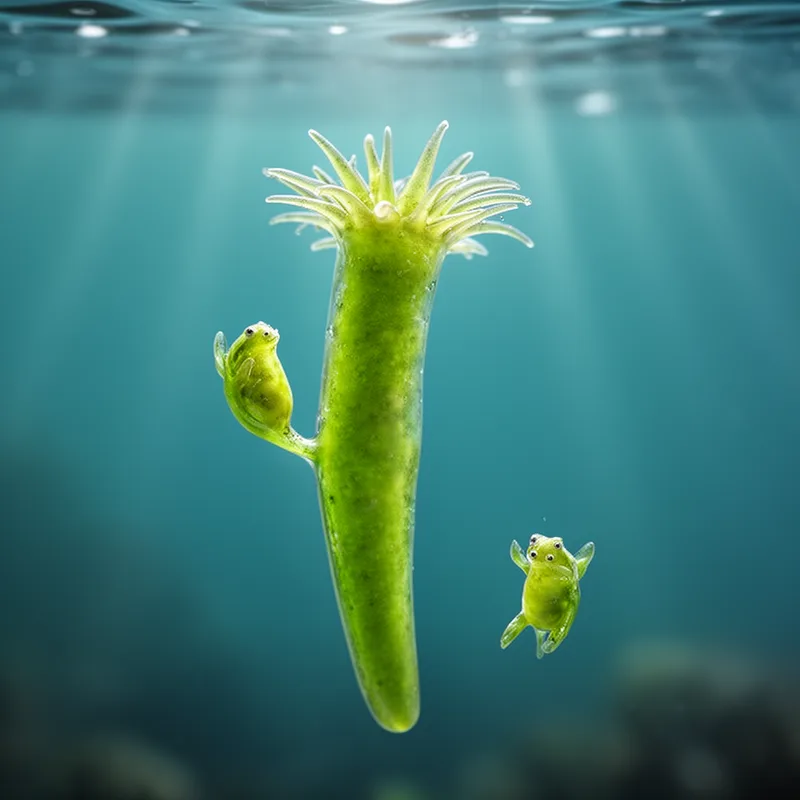
blastogenesis
- noun
- /blæstəˈdʒɛnɪsɪs/
- Specialized
- Many simple organisms, such as hydras, reproduce through blastogenesis.
Examples
-
Researchers observed blastogenesis in the laboratory cultures of yeast cells.
-
The study of blastogenesis helps scientists understand the evolutionary strategies of asexual reproduction.
-
The process of blastogenesis is fascinating in lower organisms.
-
Many species utilize blastogenesis to reproduce asexually.
-
Many simple organisms, such as hydras, reproduce through blastogenesis.
-
Researchers observed blastogenesis in the laboratory cultures of yeast cells.
-
Many species utilize blastogenesis to reproduce asexually.
Synonyms

 17
6.9
17
6.9

A way some simple living things make a new individual from a small growth on the parent

 1
4.6
1
4.6
A way of making new living things from one parent without sex that makes identical copies

A way some simple animals or plants make a new living thing by growing a small bud

Reproduction that happens without sex cells joining in some plants and animals
Surface Forms
Morphology
Etymology
Blastogenesis comes from the Greek parts blasto- meaning 'bud' or 'sprout' and -genesis meaning 'origin' or 'creation', like in genesis. So it literally means 'creation by budding', which is why the word describes asexual reproduction where a new organism grows as a bud from the parent.