

fission
 1
6.3
1
6.3

- noun
- /ˈfɪʃən/
- Specialized
- The bacterium reproduces by fission, resulting in two identical daughter cells.
- fission yeast
Examples
-
OK, so I'll, I'll show you a real mitochondria and a mitochondria undergoing fission in just a minute.
-
You know anything about binary fission, cellular thermodynamics?
-
If so, it will reproduce by fission, not just into two parts, but thousands.
-
Some unicellular organisms, such as amoebas, can reproduce by fission to increase their population.
-
During fission, the original cell divides into two separate and independent cells.
Synonyms
 5
2.8
5
2.8
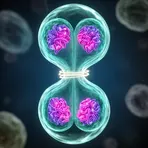
A cell splits to make two new cells for growth or repair

 1
3.8
1
3.8
A process in which a cell splits to make two or more new cells for growth and reproduction
Compounds
- Specialized
4
4.9
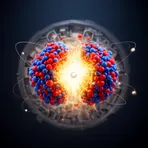
The center of a heavy atom splits into smaller parts and releases energy
- Specialized
1
6.7
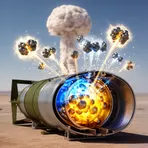
A bomb that releases a huge amount of energy by splitting heavy atoms like uranium or plutonium
Surface Forms
Morphology
fission = fiss + ion
Built from the combining form 'fiss-' plus the noun-forming suffix '-ion'; 'fiss-' is not a standalone English word, so learners cannot reliably derive the biological sense from the components alone.
Etymology
Fission comes from the Latin findere, meaning 'to split'. In biology it keeps that image: one cell splits in half to make two new cells, so fission is the name for this simple way of reproducing.