
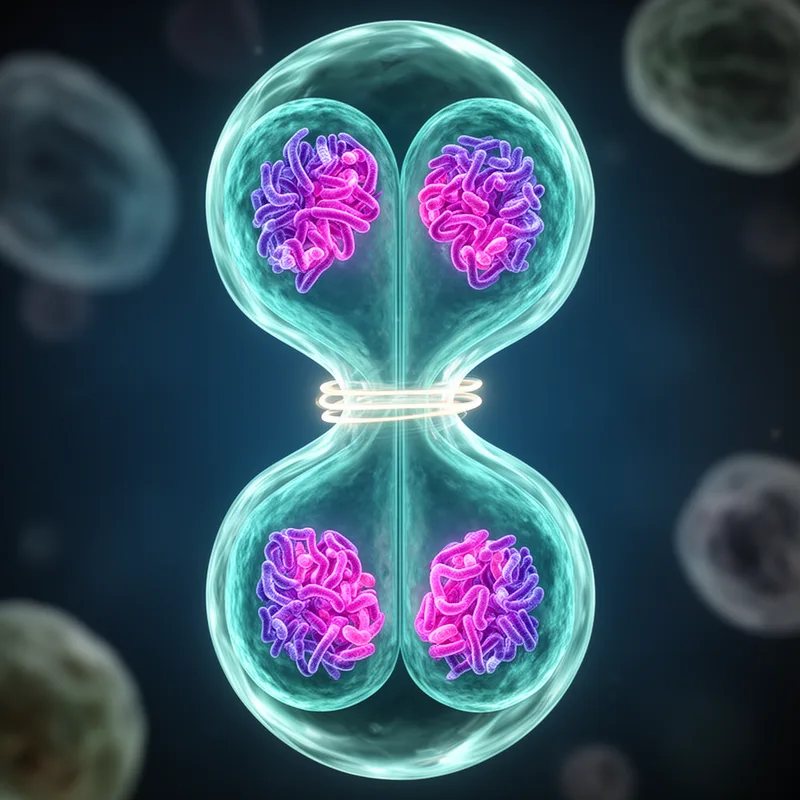
cellular division


 1
3.8
1
3.8
- noun
- /ˈsɛljələr dɪˈvɪʒən/
- Specialized
- Cellular division is essential for healing wounds, as it enables the body to create new cells to replace those that are damaged.
Examples
-
One single injection unlocks your DNA, starting a new cellular division that will release another version of yourself.
-
The light microscope was the first, and arguably is the most significant tool in the study of cellular division.
Academic text (2009) -
Effect of aphidicolin on the progression of nuclear and cellular division of rice zygotes.
Academic text (2018) -
Between eight and sixteen hours after exposure, many of the trophonts began to reproduce in their usual way, by cellular division.
Academic text (1992) -
In plants, cellular division allows for growth and development, producing new tissues and organs.
-
During cellular division, the genetic material is duplicated to ensure that each daughter cell receives the correct amount of DNA.
Synonyms
 5
2.8
5
2.8
A cell splits to make two new cells for growth or repair
Surface Forms
Morphology
The meaning 'process in which a cell splits' is directly and transparently derived from combining 'cellular' (relating to cells) with 'division' (a process of separating). This compositional noun phrase follows standard English formation and has close parallels in other languages (e.g., división celular, division cellulaire), so a B1 learner who knows both constituents will readily infer the meaning.
Etymology
Cellular division is a simple name: imagine one tiny living 'cell' being split into two. The word cellular points to the cell and division means 'to divide', so the phrase describes the process where a cell splits into two 'daughter cells' to help growth and make new cells.