

abrasion
 1
6.0
1
6.0

- noun
- /əˈbreɪʒən/
- High stream velocities, turbulence, and abrasion may limit the growth of other taxa in these steep reaches (Vincent et al. 1993a, Alger et al. 1997).
- abrasion rate
- loss from abrasion
- abrasion of marble
Examples
-
The rapid abrasion rate of marble was not considered in the earliest projects using marble fill, but the abrasion rate was considered for the most recent project at Pisa 1 and the planned project at Pisa 2.
Academic text (2008) -
Other common root causes of concrete deterioration in water and wastewater tanks are abrasion, chemical attack, and freeze-thaw cycling.
Academic text (1998) -
However, the coatings' most notable property is their abrasion and impact strength.
Academic text (1996) -
The design protects the seat from abrasion and corrosion.
Academic text (1998) -
The plan is to use gray marble or some other harder rock because the volume loss from abrasion of white marble is believed to be too great.
Academic text (2008) -
An all-metal seat design is included for superior shutoff and abrasion resistance.
Academic text (1996) -
From this data, a qualified professional can determine if the problem is freeze-thaw, chemical attack, settlement, abrasion, corrosion, etc.
Academic text (1998) -
The belts operate backlash-free without lubrication, and they are particularly resistant to chemicals, oils, and abrasion.
Academic text (1998) -
Concrete tanks can be subjected to wet-dry cycling, freeze-thaw cycling, chemical attack, and abrasion.
Academic text (1998) -
The coast is slowly changing due to the constant abrasion caused by ocean waves hitting the rocks.
Synonyms
 4
5.1
4
5.1
A slow wearing away of rock by water, wind, or ice
 1
7.4
1
7.4
Slow wearing away of a surface by rubbing or natural forces

Slow loss of a surface by water, wind, or rubbing
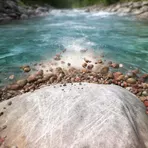
The wearing away of rock by sand and small stones carried by wind, water, or ice

A slow wearing away of a surface when something rubs it
Antonyms

How Eroded

Surface Forms
Morphology
Etymology
Abrasion comes from Latin ab- 'away' and radere 'to scrape'. Think of wind or ice slowly 'scraping away' rock, which is why abrasion describes the steady wearing down of surfaces.