
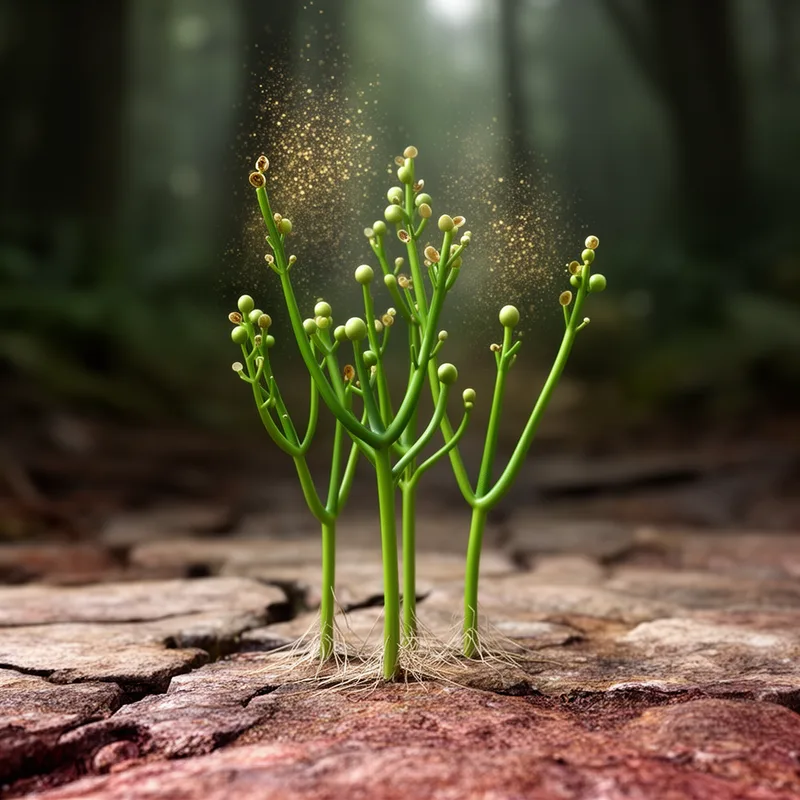
Psilopsida
- noun
- /ˌsaɪləˈsɪdə/
- Specialized
- Research on Psilopsida provides insight into the evolution of early land plants.
Examples
-
The Psilopsida were once considered some of the most primitive vascular plants.
-
Few living plants today resemble the ancient Psilopsida in structure.
-
The Psilopsida are fascinating plants.
-
Many researchers study Psilopsida to understand plant evolution.
-
Research on Psilopsida provides insight into the evolution of early land plants.
-
Few living plants today resemble the ancient Psilopsida in structure.
-
The Psilopsida were once considered some of the most primitive vascular plants.
Synonyms
A group of simple fern-like plants with no true roots and small spore sacs

Simple green plants like whisk ferns that have no true roots and make spores
An order of simple plants with forked branches and no true leaves or roots
A small family of simple fern-like plants with almost no leaves that grow in tropical places
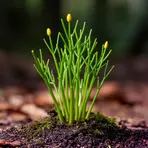
A group of simple, leafless plants called whisk ferns that have no true roots or leaves

A tropical plant with thin branching stems that look like a small brush and have no roots
Surface Forms
Etymology
The word Psilopsida comes from the Greek root psil- meaning 'bare' or 'smooth' and the ending -opsida used for groups of plants. So the name is a handy memory: these early, primitive plants look 'bare' because they have no true roots or leaves and only very simple spore sacs.

