
Psilotaceae
- noun
- /ˌsaɪləˈteɪʃiˌi/
- Specialized
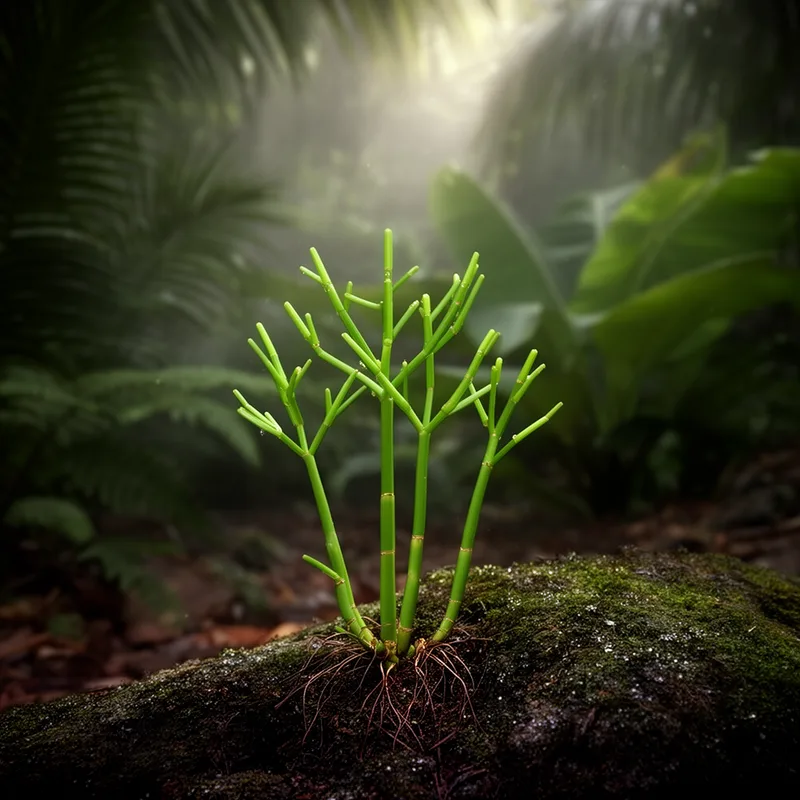
- The Psilotaceae are characterized by their simple stems and lack of true roots.
Examples
-
Some species within the Psilotaceae family can be found growing in tropical forests.
-
Botanists have debated the evolutionary position of Psilotaceae among ferns.
-
The Psilotaceae family includes plants that thrive in humid environments.
-
Many species of Psilotaceae are found in tropical rainforests.
-
Some species within the Psilotaceae family can be found growing in tropical forests.
-
The Psilotaceae are characterized by their simple stems and lack of true roots.
-
Many species of Psilotaceae are found in tropical rainforests.
Synonyms

A small group of simple ferns with bare stems and very small leaves
Compounds
- Specialized
A small group of simple ferns with bare stems and very small leaves
Surface Forms
Morphology
Psilotaceae = Psilotum (opaque) = Psilot + aceae
This follows a specialized botanical naming pattern meaning the family containing Psilotum, but that convention is not accessible to most learners.
Etymology
Psilotaceae comes from the Greek psilos, meaning 'bare' or 'smooth', because these very simple, fern-like plants have almost leafless stems that look bare. The ending -aceae is the common name for a plant family (as in Rosaceae, the rose family), so Psilotaceae basically means the 'bare' plant family.

