
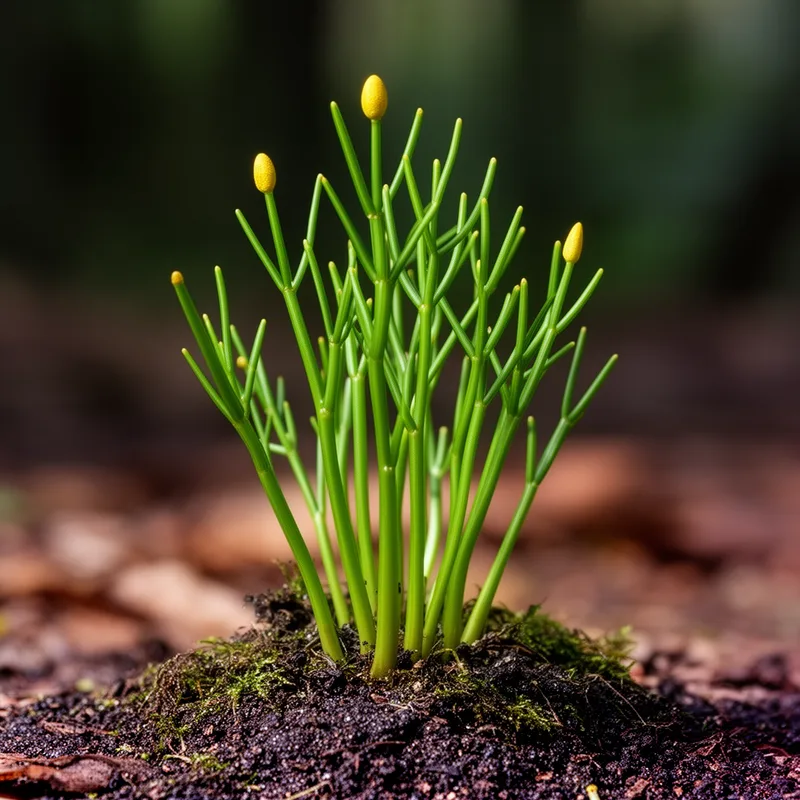
Psilotum
- noun
- /ˈsaɪləˌtʌm/
- Specialized
- Psilotum is often called a whisk fern due to its simple, leafless appearance.
Examples
-
The genus Psilotum is notable for having no true roots or leaves.
-
Some botanists study Psilotum to understand the evolution of vascular plants.
-
The Psilotum species thrive in tropical environments.
-
Have you ever seen a Psilotum in the wild?
-
Psilotum is a unique type of plant that thrives in shaded forest areas, resembling a fern due to its slender, whip-like stems.
-
Many students in botany classes learn about Psilotum to explore its characteristics as a primitive plant in the evolutionary tree.
-
One fascinating aspect of Psilotum is that it reproduces through spores rather than seeds, making it distinct among land plants.
Synonyms

A tropical plant with thin branching stems that look like a small brush and have no roots
Compounds

- Specialized
A small fern-like plant with thin yellow stems that often grow on tree trunks or the ground in tropical areas
Surface Forms
Etymology
Psilotum comes from the Greek root psilos, meaning 'bare' or 'smooth'. These plants are very simple and have no true leaves or roots, so the name helps you remember their 'bare' look.

