
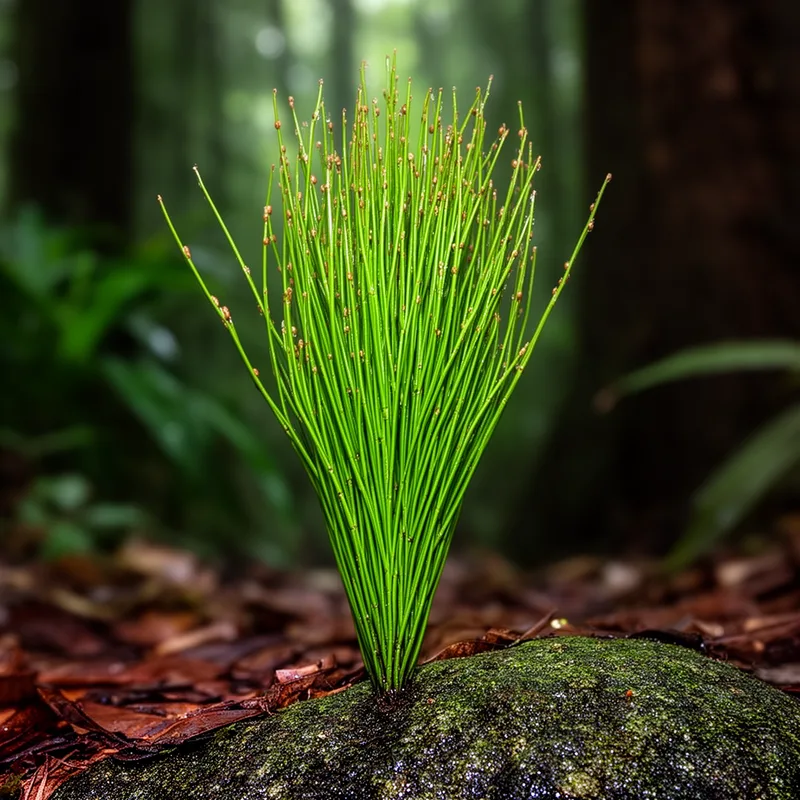
whisk fern
- noun
- /ˈwɪsk fɜrn/
- Specialized
- The whisk fern is known for its unique brush-like structure and ability to thrive without soil.
Examples
-
Scientists find the whisk fern fascinating because it lacks true roots.
-
The whisk fern thrives in humid tropical forests where soil nutrients are scarce.
-
The whisk fern's unique appearance makes it popular among plant collectors.
-
The whisk fern thrives in humid environments.
-
I saw a whisk fern at the botanical garden.
-
In the tropical rainforest, the whisk fern stands out due to its simple branching stems.
-
Many gardeners appreciate the whisk fern for its unusual look and low maintenance needs.
Synonyms
A group of simple, leafless plants called whisk ferns that have no true roots or leaves
Surface Forms
Morphology
The compound is directly compositional: 'whisk' (a small brush) + 'fern' (a plant) yields the idea of a fern with a brush- or whisk-like appearance, which a B1 learner who knows both words can readily infer. Botanical specifics (genus Psilotum, rootlessness) are specialized, but the basic descriptive meaning is transparently derivable from the constituents.
Etymology
Whisk fern likely gets its name from the plant's thin, branched stems that make a small 'brush-like' bundle, so the word whisk describes its shape and fern tells you it is a plant. That's why the name helps you picture this fern's brush-like look.

