

Psilotales
- noun
- /ˌsaɪləˈteɪliz/
- Specialized
- The Psilotales are distinguished by their lack of true leaves and roots.
Examples
-
Botanists study the Psilotales to understand the evolution of vascular plants.
-
Fossils of Psilotales provide insight into ancient plant forms.
-
The Psilotales are fascinating because they lack true roots.
-
Did you know that Psilotales have a simple structure?
-
Researchers often examine Psilotales to learn about the characteristics of early vascular plants.
-
The unique features of Psilotales make them a subject of interest for plant biologists.
-
Botanists have found that Psilotales thrive in specific environments due to their primitive structures.
Synonyms

A group of simple plants like whisk ferns that have no true roots or leaves and make spores
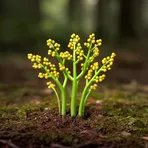
A group of simple fern-like plants with no true roots and small spore sacs
Surface Forms
Etymology
The word Psilotales comes from the Greek root psilos meaning 'bare' and the botanical ending -ales used for plant orders. So, it names a group of 'bare' looking plants that are simple in form and have no true leaves or roots.

