
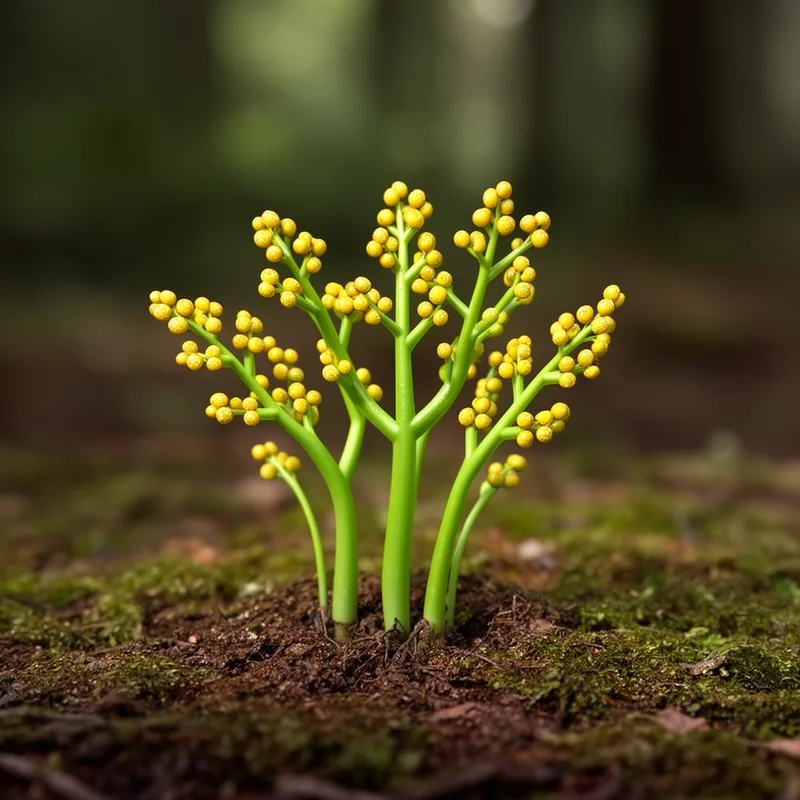
Psilotatae
- noun
- /ˌsaɪləˈteɪi/
- Specialized
- Unlike most ferns, Psilotatae lack true leaves and roots, setting them apart in the plant kingdom.
Examples
-
Botanists often study Psilotatae to understand the evolution of plant root systems.
-
The Psilotatae represent some of the most ancient vascular plants still existing today.
-
The Psilotatae are fascinating plants to study.
-
Did you know that Psilotatae lack true roots?
-
Botanists often study Psilotatae to understand the evolution of plant structures without true roots.
-
The Psilotatae represent some of the most ancient vascular plants with unique characteristics.
-
Unlike most ferns, Psilotatae are distinguished by their simple leaves and lack of true roots.
Synonyms

A group of simple plants like whisk ferns that have no true roots or leaves and make spores

Simple green plants like whisk ferns that have no true roots and make spores
An order of simple plants with forked branches and no true leaves or roots
Compounds
- Specialized
Simple green plants like whisk ferns that have no true roots and make spores
Surface Forms
Etymology
Psilotatae comes from the Greek root psilos, meaning 'bare' or 'naked'. These plants are called that because they look 'bare'—they have no true roots or leaves—so the name helps you remember their simple, ancient form.

